Does Customer Service Automation Improve CSAT?
Customer service automation can improve CSAT, but not by default. The largest field study so far found AI made support agents 15% faster and customers more positive, while surveyed satisfaction did not measurably change.
This guide covers which metrics automation moves, what the research and Klarna’s rollout show, and how to automate so CSAT goes up rather than sideways.
1. The Short Answer
Customer service automation improves satisfaction scores when it resolves the customer’s problem and lets them reach a person easily. When it only replies faster, CSAT tends to stay flat.
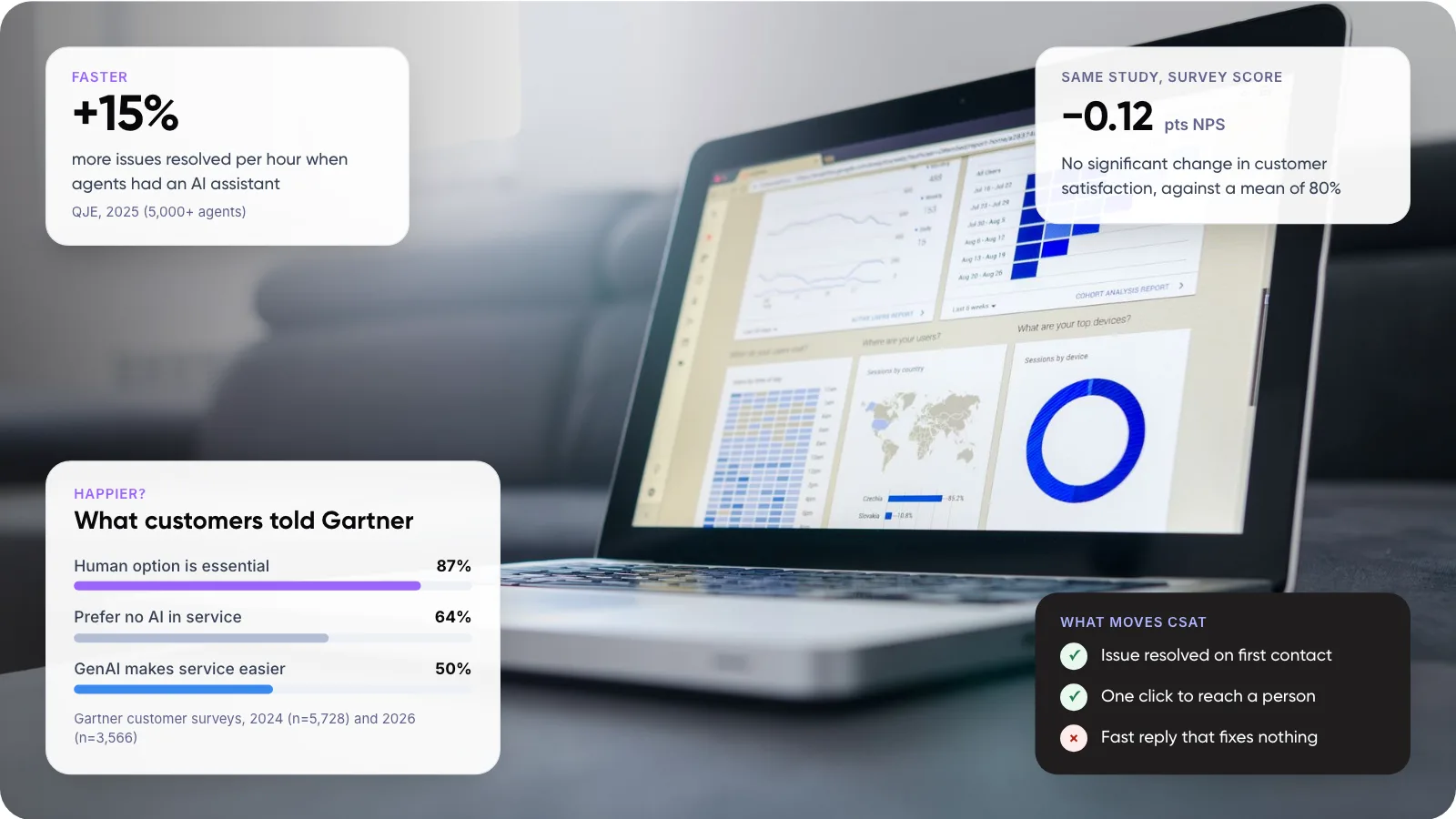
The best evidence comes from a study published in the Quarterly Journal of Economics in 2025. An AI assistant raised agents’ resolutions per hour by 15% and made customer messages more positive. Net promoter score, the satisfaction survey it tracked, did not measurably change.
Key takeaways
- Automation reliably improves speed metrics. CSAT only follows when the problem actually gets solved.
- A QJE study of 5,000+ agents found AI improved customer sentiment with no significant change in surveyed satisfaction.
- 87% of customers told Gartner in 2026 that an option to reach a human is essential.
- Klarna’s AI matched human CSAT on its own measure in 2024. By 2025 its CEO said a cost-first approach lowered quality.
- Measure resolution, repeat contacts and post-escalation CSAT, not just deflection.
2. Which Metrics Does Customer Service Automation Change?
“Customer satisfaction” usually means one of three survey scores. CSAT rates a single interaction. NPS (net promoter score) asks whether the customer would recommend you, so it reflects the whole relationship. CES (customer effort score) asks how easy it was to get help.
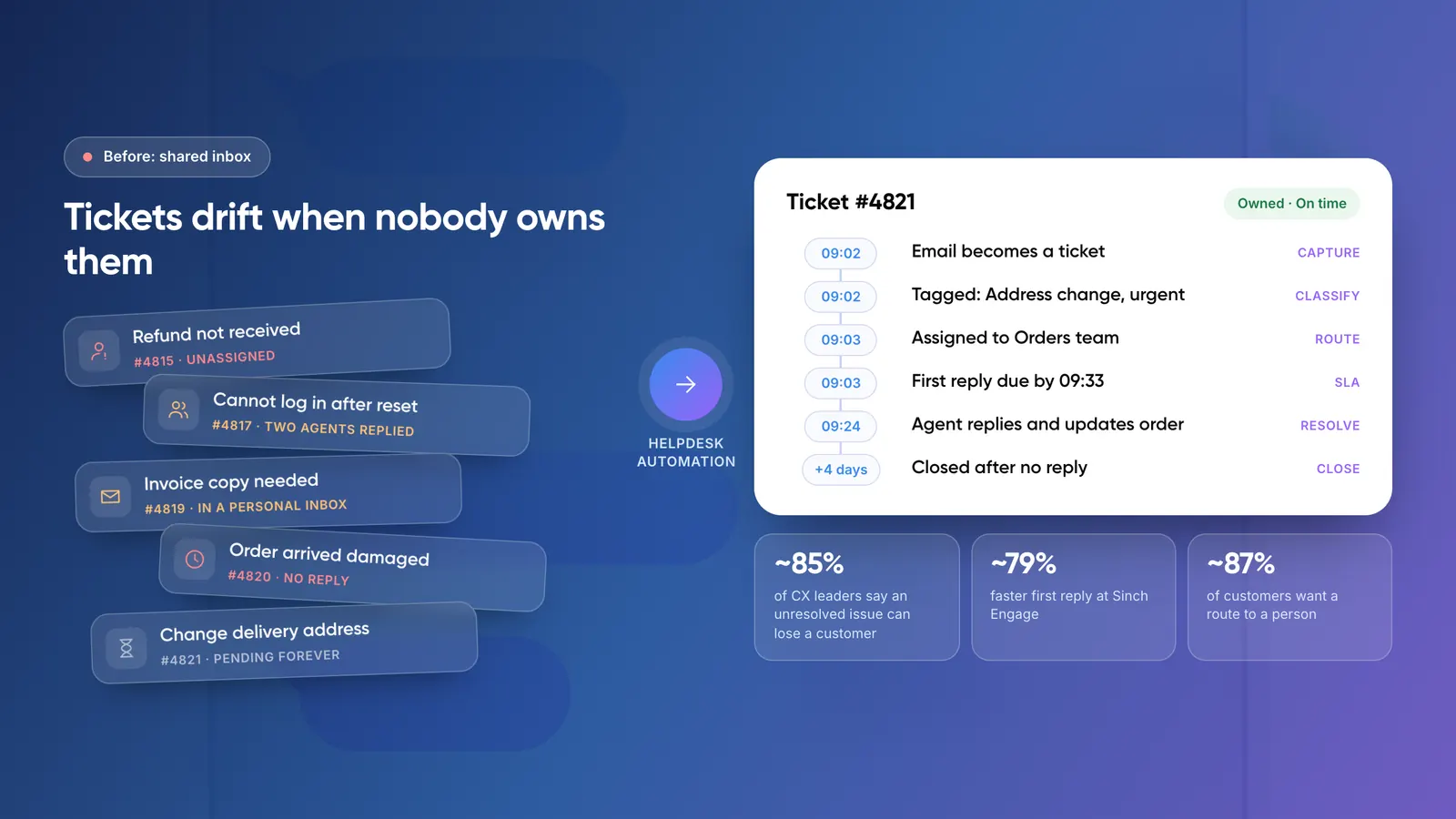
Your helpdesk also tracks operational metrics nobody has to answer a survey for. Helpdesk automation moves these directly. Survey scores move only when the customer notices and values the change.
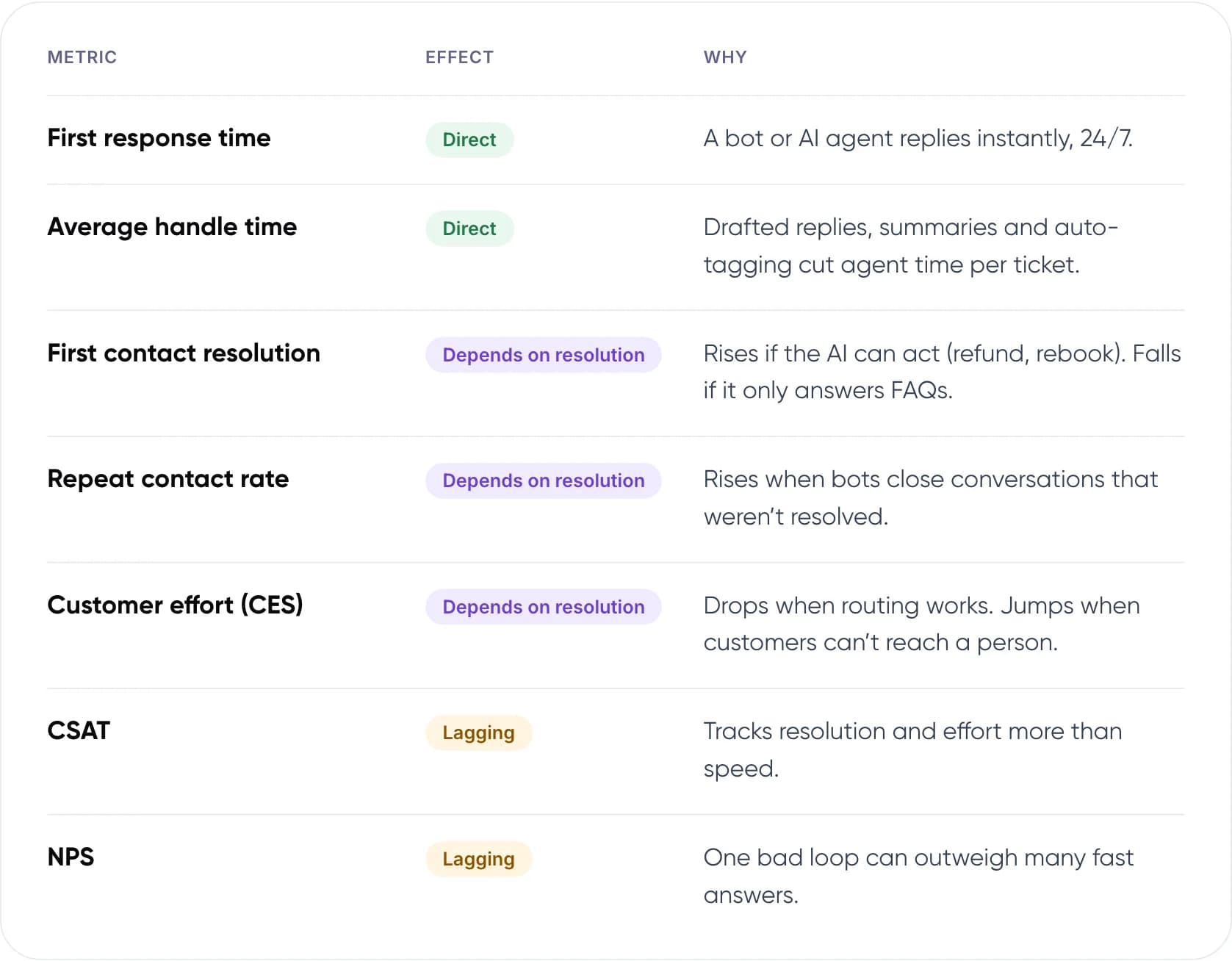
- First response time (direct): a bot or AI agent replies instantly, 24/7.
- Average handle time (direct): drafted replies, summaries and auto-tagging cut agent time per ticket.
- First contact resolution (depends on resolution): rises if the AI can act (refund, rebook). Falls if it only answers FAQs.
- Repeat contact rate (depends on resolution): rises when bots close conversations that weren’t resolved.
- Customer effort, CES (depends on resolution): drops when routing works. Jumps when customers can’t reach a person.
- CSAT (lagging): tracks resolution and effort more than speed.
- NPS (lagging): one bad loop can outweigh many fast answers.
This is why the benefits of customer service automation show up first in your ops dashboard, and much later, if at all, in your survey results.
3. What Does the Research Say About AI Customer Service and CSAT?
The 5,000-agent field study
Erik Brynjolfsson, Danielle Li and Lindsey Raymond tracked more than 5,000 customer support agents as a generative AI assistant was rolled out in stages. Because the rollout was staggered, they could compare agents with and without the tool over the same weeks.
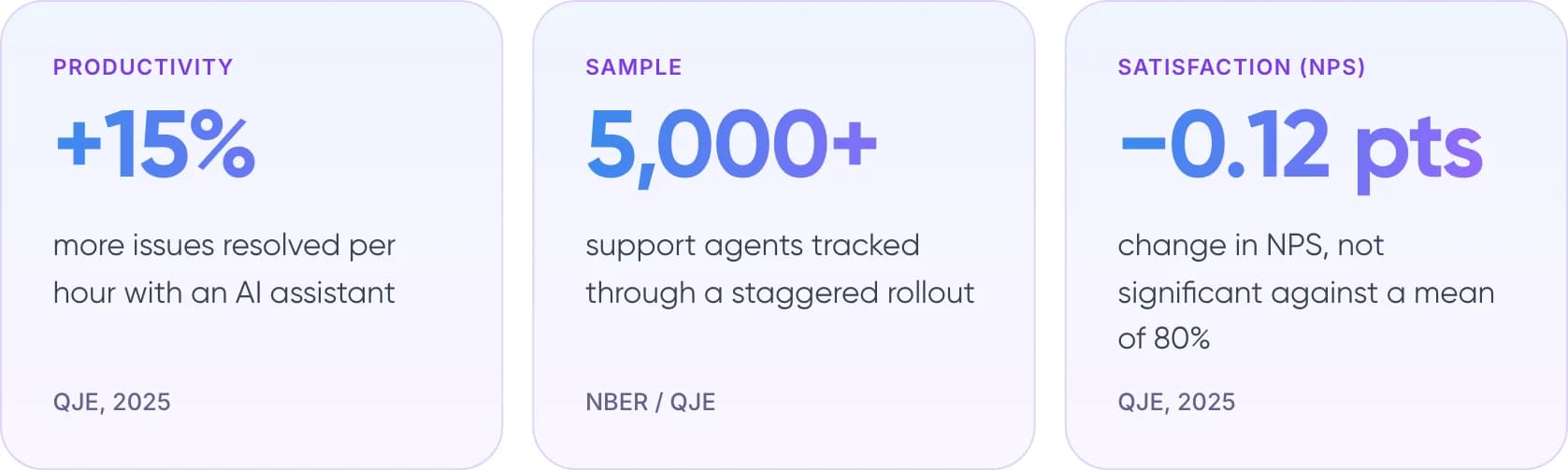
- +15% more issues resolved per hour with an AI assistant (QJE, 2025).
- 5,000+ support agents tracked through a staggered rollout (NBER / QJE).
- −0.12 pts change in NPS, not significant against a mean of 80% (QJE, 2025).
The largest gains went to newer and less-skilled agents. Customers in AI-assisted chats asked for a manager less often, and agent attrition fell. Yet the NPS coefficient was −0.12 percentage points against a mean of 80%. Faster, calmer conversations did not lift survey scores in that setting.
What customers say about AI in service
Gartner’s 2024 survey of 5,728 customers found 64% would prefer companies didn’t use AI in customer service. The top worry was that AI would make it harder to reach a person. By 2026, half said generative AI makes service easier, on one condition.
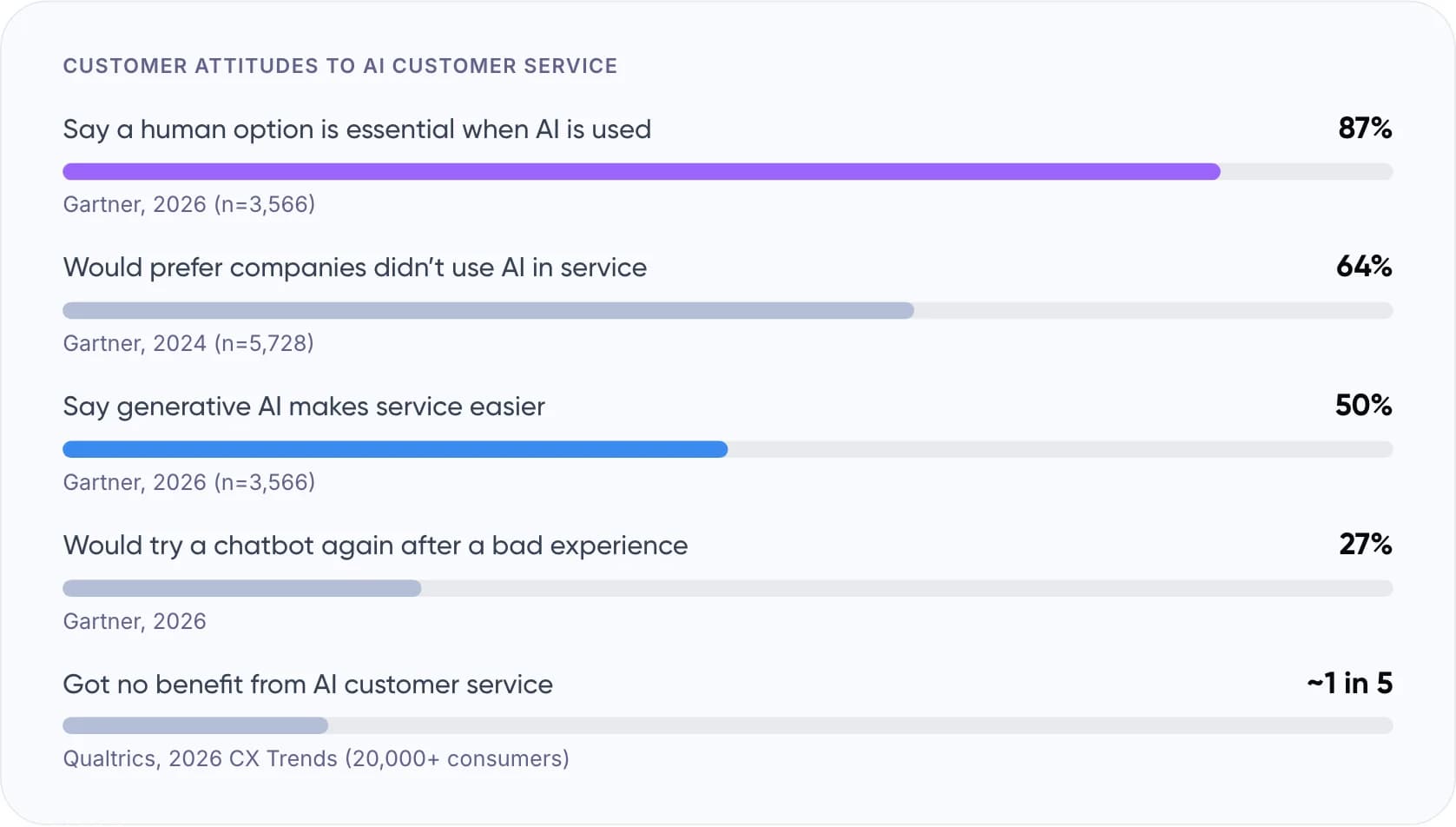
- 87% say a human option is essential when AI is used (Gartner, 2026, n=3,566).
- 64% would prefer companies didn’t use AI in service (Gartner, 2024, n=5,728).
- 50% say generative AI makes service easier (Gartner, 2026, n=3,566).
- 27% would try a chatbot again after a bad experience (Gartner, 2026).
- About 1 in 5 got no benefit from AI customer service (Qualtrics, 2026 CX Trends, 20,000+ consumers).
That condition is human access. In Gartner’s 2026 survey of 3,566 customers, 87% called an option to reach a human essential. The Qualtrics 2026 Consumer Experience Trends report found nearly one in five people got no benefit from AI customer service, almost four times the rate for AI use in general.
Note: What customers say and what they do differ. People who say they’d rather avoid AI still use it when it fixes things quickly. The figure to watch is Gartner’s 27% who would try a chatbot again after a bad experience.
For how to keep that human option without losing the speed, see how to automate customer service without losing the human touch.
4. Case Study: What Klarna’s AI Customer Support Numbers Showed
Klarna is the most-quoted example of AI customer support at scale. It’s useful because both the launch and the correction are public.
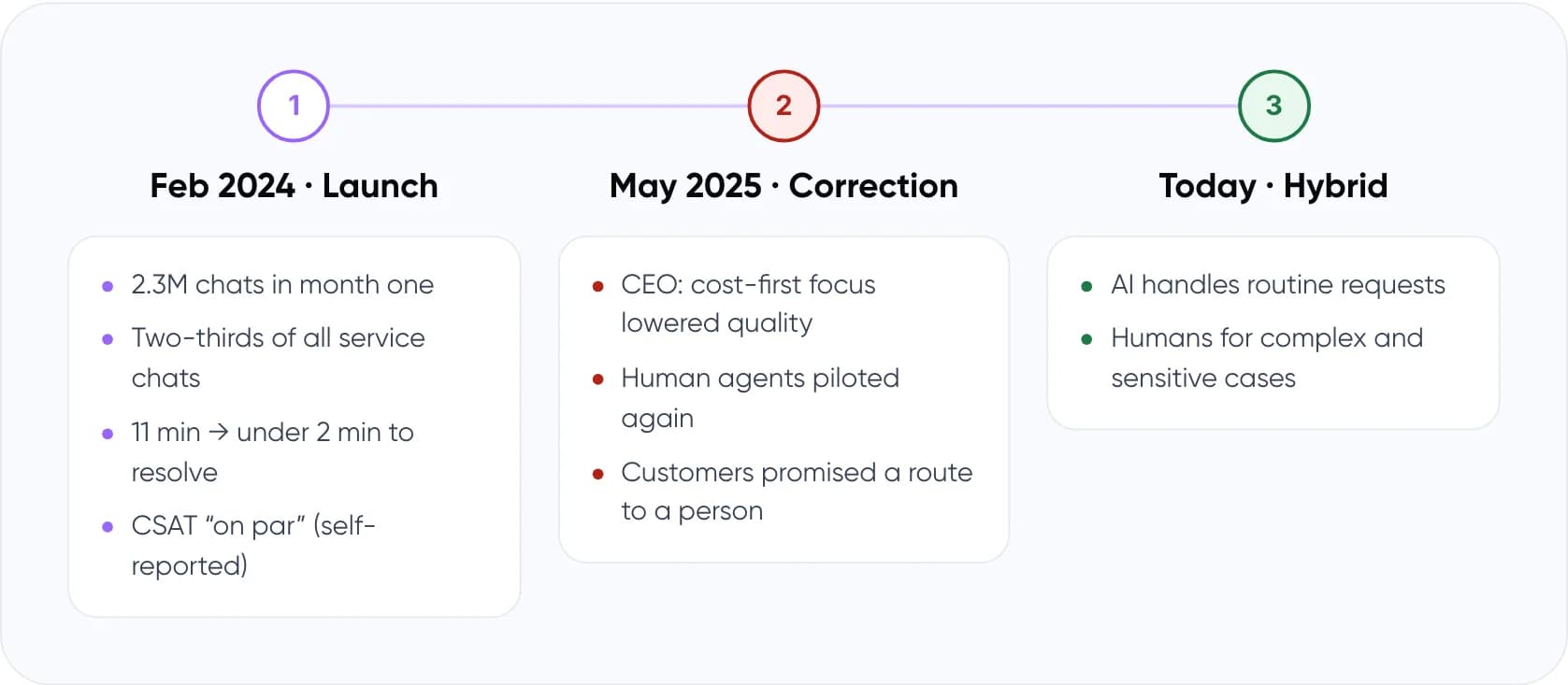
- Feb 2024, launch: 2.3M chats in month one, two-thirds of all service chats, 11 min to under 2 min to resolve, CSAT “on par” (self-reported).
- May 2025, correction: CEO says a cost-first focus lowered quality; human agents piloted again; customers promised a route to a person.
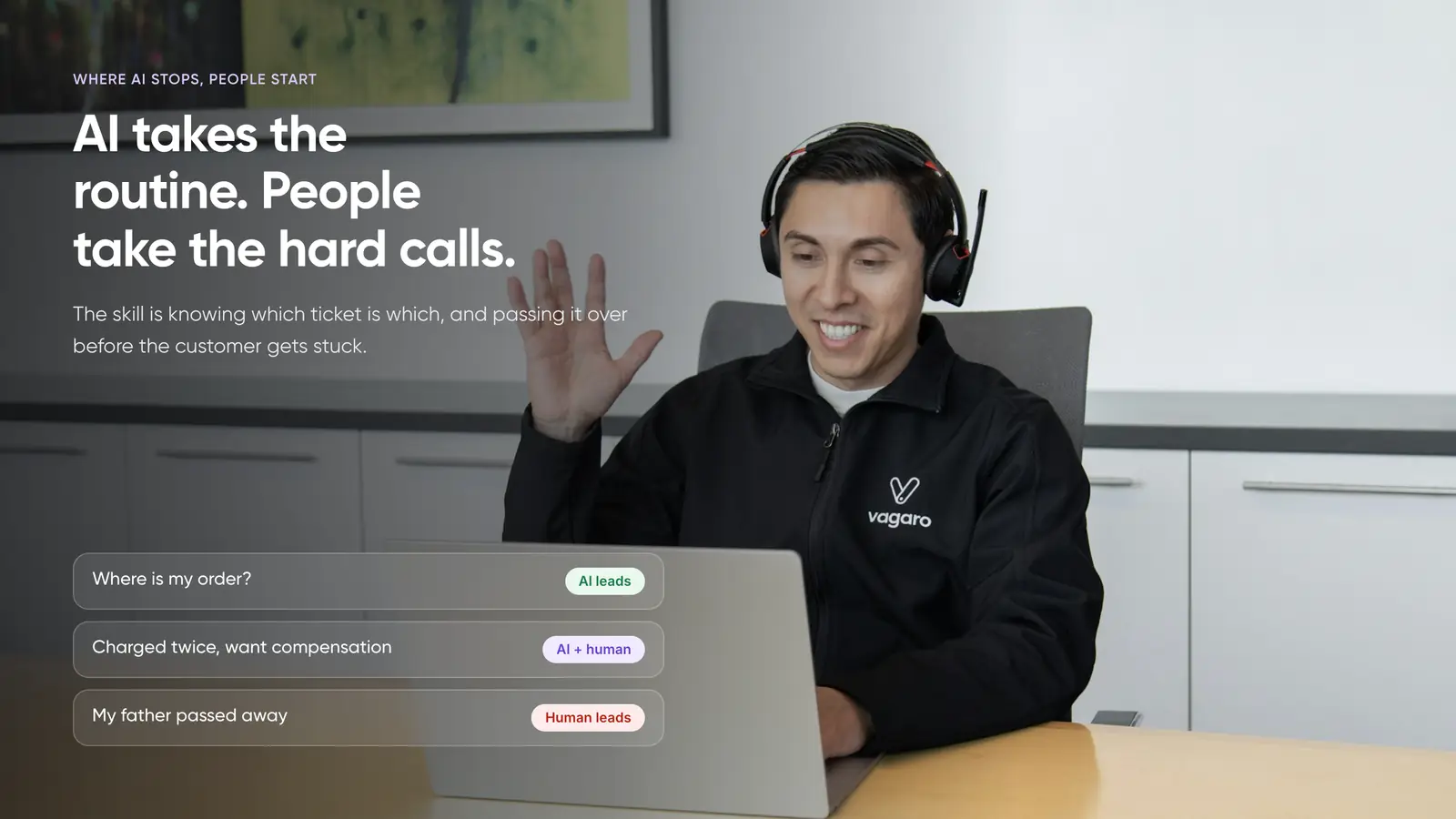
- Today, hybrid: AI handles routine requests; humans take complex and sensitive cases.
In February 2024 Klarna said its assistant handled 2.3 million conversations in its first month, two-thirds of all service chats. It reported resolution time falling from 11 minutes to under 2, 25% fewer repeat inquiries, and satisfaction on par with human agents. Every figure was self-reported.
In May 2025, CEO Sebastian Siemiatkowski told Bloomberg that cost had been “a too predominant evaluation factor” and the result was lower quality. Klarna began piloting human agents again, and the AI stayed as the front line for routine requests. We look at what that correction means for escalation design in can automation handle complex customer problems?
Our reading: the launch metrics measured volume and speed, which AI handles well. They said little about complex or emotional conversations, where quality fell. An average CSAT can hold steady while a smaller, high-value group of customers has a much worse time.
5. Why Automated Customer Service Raises CSAT for Some Teams and Not Others
Across the research the pattern is consistent. Automated customer service helps satisfaction when it resolves, and hurts it when it deflects.
- Resolution beats speed. An instant reply that fixes nothing feels worse than a 10-minute wait for someone who does. Automation that can issue a refund or change a booking moves first contact resolution. FAQ-only bots mostly move response time.
- The escalation seam is where scores are lost. The worst experience is explaining a problem to a bot, getting transferred, and explaining it again. Passing full context to the agent fixes most of this. Our guide to complex customer problems covers escalation triggers step by step.
- Agent assist is the lower-risk path. In the QJE study a human stayed in every conversation. Sentiment improved and managers were called less. Customer-facing bots carry more upside on cost and more downside on CSAT.
- Survey bias flatters bots. Many teams only survey conversations the bot contained. Customers who gave up never get asked.
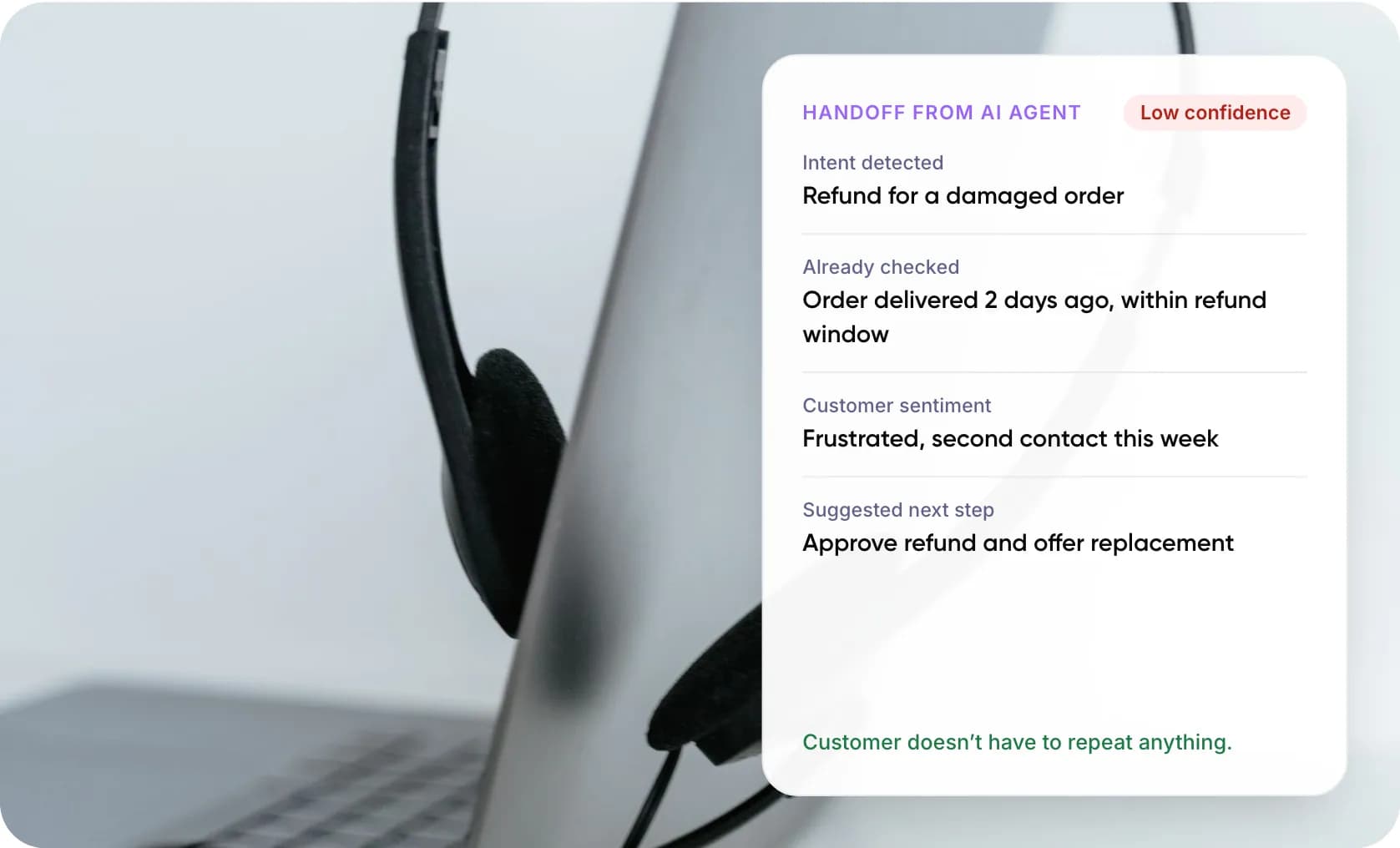
Illustrative example of a context handoff. The agent picks up where the AI stopped. Photo by MART PRODUCTION on Pexels.
In that illustrative handoff (flagged low confidence), the agent sees:
- Intent detected: refund for a damaged order.
- Already checked: order delivered 2 days ago, within refund window.
- Customer sentiment: frustrated, second contact this week.
- Suggested next step: approve refund and offer replacement.
The customer doesn’t have to repeat anything.
In our view, what decides the result is what the automation is allowed to do and when it gets out of the way. Tool choice matters less.
Tip: Before you automate an intent, check how often agents resolve it on first contact today. If people can’t solve it in one go, an AI agent won’t either. You’ll just add a step.
Want to know which of your support intents are safe to automate? Book a free AI consultation.
6. Automated Customer Service Pros and Cons by Approach
“Automation” covers very different setups. The trade-offs depend on where the AI sits in the conversation. For the basic difference between a chatbot and full automation, see chatbots vs customer support automation.
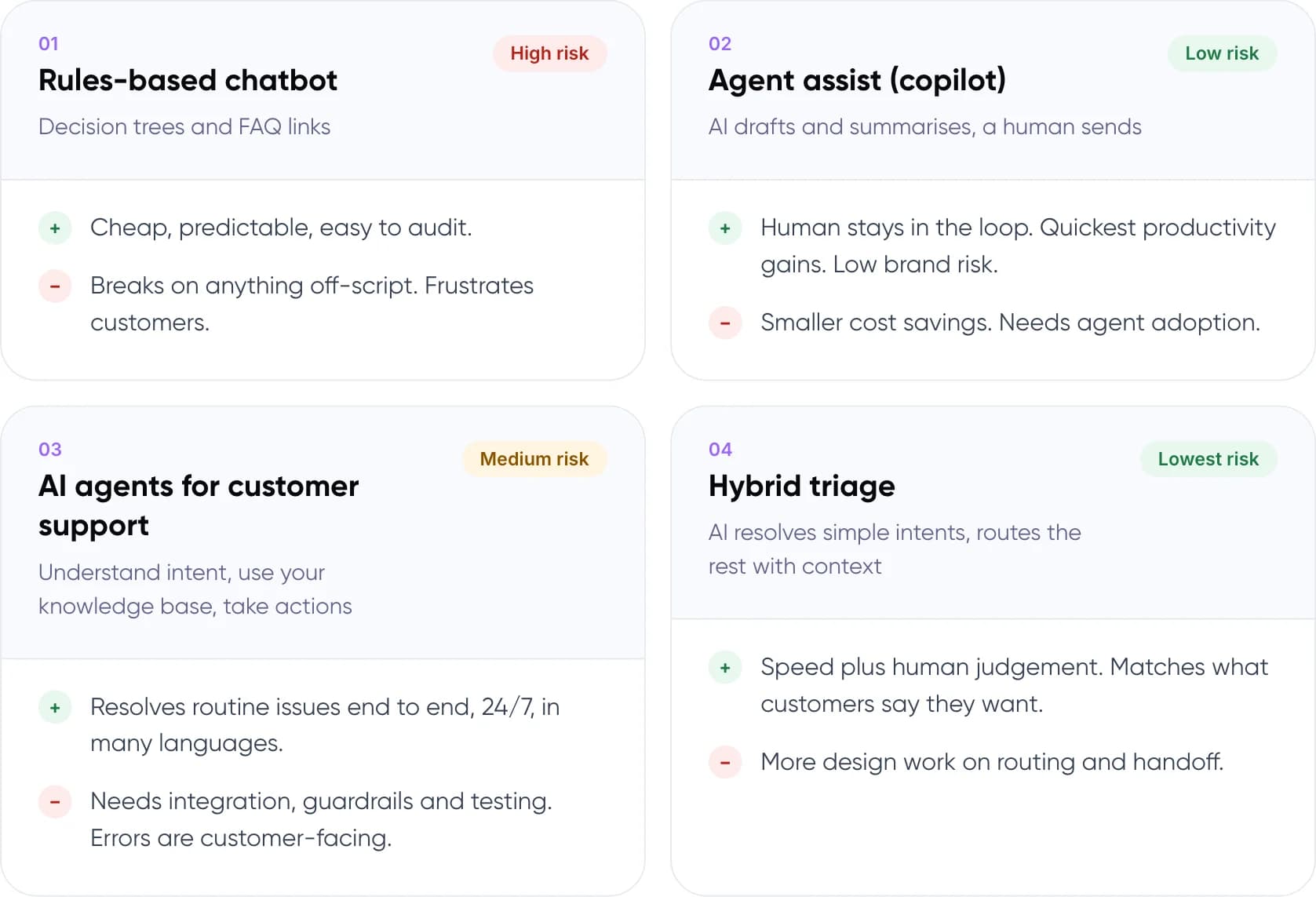
- Rules-based chatbot (high CSAT risk). Decision trees and FAQ links. Pros: cheap, predictable, easy to audit. Cons: breaks on anything off-script and frustrates customers.
- Agent assist, or copilot (low risk). AI drafts and summarises, a human sends. Pros: human stays in the loop, quickest productivity gains, low brand risk. Cons: smaller cost savings, needs agent adoption.
- AI agents for customer support (medium risk). Understand intent, use your knowledge base, take actions. Pros: resolves routine issues end to end, 24/7, in many languages. Cons: needs integration, guardrails and testing; errors are customer-facing.
- Hybrid triage (lowest risk). AI resolves simple intents and routes the rest with context. Pros: speed plus human judgement, and it matches what customers say they want. Cons: more design work on routing and handoff.
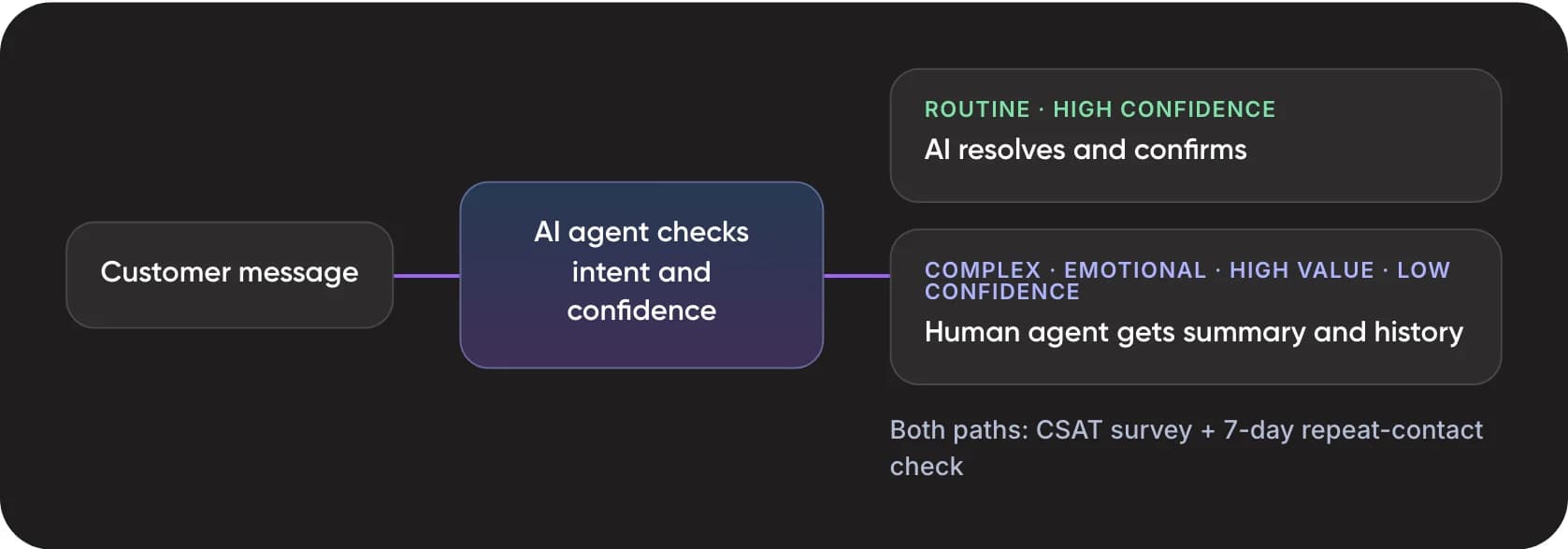
- Customer message goes to an AI agent that checks intent and confidence.
- Routine, high confidence: AI resolves and confirms.
- Complex, emotional, high value or low confidence: a human agent gets the summary and history.
- Both paths: CSAT survey plus a 7-day repeat-contact check.
For most mid-size teams we’d start with agent assist plus a narrow AI agent on two or three high-volume, low-risk intents. Widen scope once the data shows those intents resolve without repeat contacts. We’d avoid a rules-based customer service chatbot as the only front door. It’s the setup most likely to trap customers in a loop.
7. How to Automate Customer Service Without Hurting CSAT
This sequence works whether you build custom AI agents for customer support or configure a platform like Zendesk, Intercom or Freshdesk.
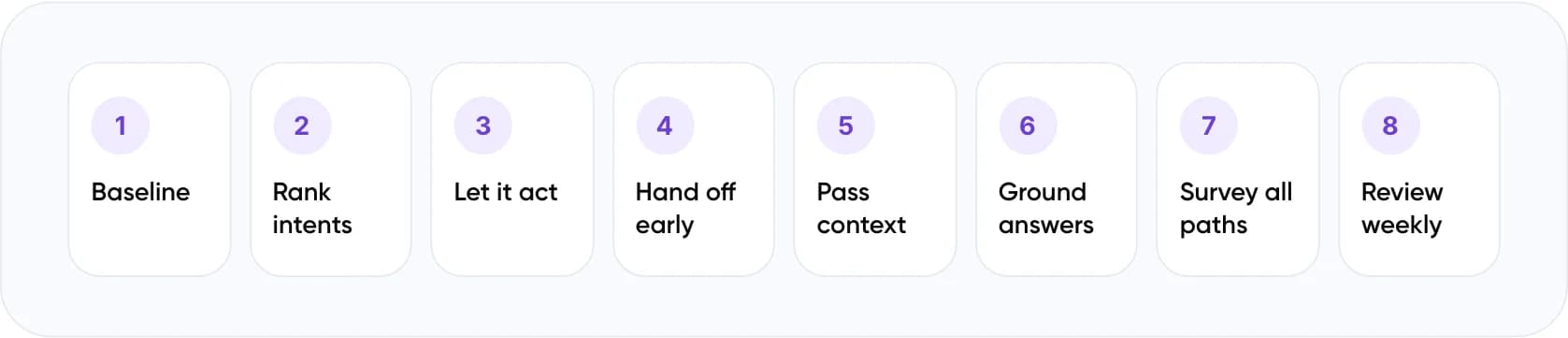
- Baseline your metrics. Record CSAT, CES, first contact resolution, repeat contacts and escalation rate by intent for at least four weeks before launch.
- Rank intents by volume and risk. Order status, password resets and plan changes usually go first. Disputes, complaints and cancellations stay with people. Our list of customer service tasks you can automate helps with the ranking.
- Let the AI act, not just answer. Connect it to order, billing or booking systems. Customer support automation that only quotes your help centre mostly moves response time.
- Set confidence thresholds. If the AI isn’t confident, or the customer asks for a person, transfer straight away.
- Pass full context on handoff. The agent should see the conversation, the detected intent and any account data already pulled. The customer never repeats themselves.
- Ground answers in your content. Retrieve from your policies and knowledge base, and keep them current. Stale articles produce confident wrong answers. See deploying agentic RAG for customer service.
- Survey everyone. Send CSAT after bot-only, bot-then-human and human-only conversations, and compare all three.
- Review conversations weekly. Read failed and escalated chats, fix the intent or content, and widen scope only after an intent holds steady for a month.
Warning: Don’t survey only the conversations the bot “contained”. Customers who gave up never get asked, so bot CSAT looks fine while overall CSAT drops.
8. A Real Example: Escalation and Human Review Built In
For Paymate, we built a support system that answers across voice, email and chat in English, Spanish and French. It validates each response and escalates to a human when confidence is low.
For Zenva, an AI agent drafts replies to Shopify customer emails from store policies and order data. The support team reviews and sends. Both designs keep a person in the loop exactly where the research says CSAT is won or lost.
9. How Should You Measure the Impact?
Most “AI improved our CSAT” claims compare this quarter with last quarter. That mixes the automation with seasonality, product changes and staffing. Run automation on a share of traffic first, such as one region or a random 20% of conversations, and keep the rest as a control group.
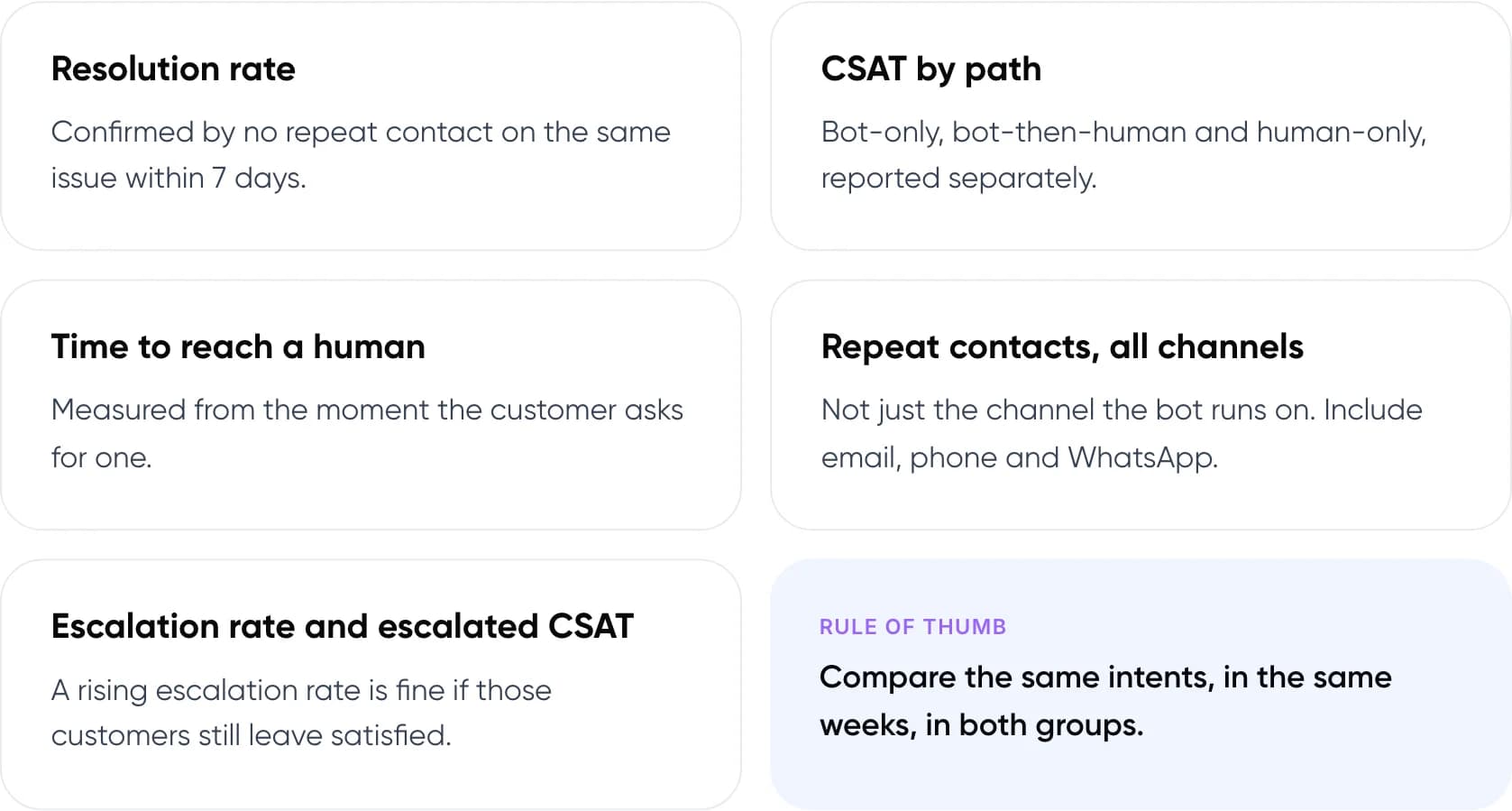
- Resolution rate: confirmed by no repeat contact on the same issue within 7 days.
- CSAT by path: bot-only, bot-then-human and human-only, reported separately.
- Time to reach a human: measured from the moment the customer asks for one.
- Repeat contacts, all channels: not just the channel the bot runs on. Include email, phone and WhatsApp.
- Escalation rate and escalated CSAT: a rising escalation rate is fine if those customers still leave satisfied.
Rule of thumb: compare the same intents, in the same weeks, in both groups.
If resolution and repeat contacts improve and post-escalation CSAT holds, overall CSAT usually follows. For teams in India or the UAE, include WhatsApp in the count. A customer who gives up on a web chatbot often comes back there.
10. Frequently Asked Questions
What is customer service automation?
Customer service automation is software that handles parts of support work without a person doing each step, from chatbots and AI agents to auto-routing and AI-drafted replies. Its effect on satisfaction depends on whether it resolves issues or only responds faster. For the full picture, read what customer support automation is and how it works.
Does AI customer service improve CSAT?
It can, but not automatically. A 2025 QJE study of more than 5,000 agents found AI assistance raised productivity 15% and improved customer sentiment, with no significant change in surveyed satisfaction. CSAT rises when automation resolves problems on first contact and lets customers reach a human easily.
What are the advantages of automated customer service?
Instant replies at any hour, less handling time per ticket, consistent answers and support in more languages without extra hiring. Klarna reported in 2024 that its assistant cut average resolution time from 11 minutes to under 2. These gains reach CSAT only when issues are fully resolved.
What are the disadvantages of automated customer service?
Wrong answers, customers stuck in loops, and losing people who need judgement or empathy. Gartner’s 2024 survey found 64% of customers would prefer companies didn’t use AI for service, mainly because they fear it blocks access to a person. Poorly scoped bots can also raise repeat contacts.
Should customers always be able to reach a human?
Yes, in our view. Gartner’s 2026 survey found 87% of customers consider an option to reach a human essential when a company uses generative AI. Make the path obvious, transfer the conversation context, and route complex, emotional or high-value cases to people from the start.
How long before automation shows up in CSAT?
Operational metrics such as first response time change within days. CSAT and NPS usually lag, because they reflect resolution and repeat experiences over weeks. Plan on at least four to eight weeks of data from a control group before judging the effect.
11. Conclusion
Customer service automation improves satisfaction scores when it’s built to resolve issues and hand off cleanly. Speed gains are reliable. CSAT gains are not, and customers have been clear that a route to a human is non-negotiable. Pick two or three routine intents, baseline them, automate with a control group, and let resolution and repeat-contact data tell you where to go next.
Tip: To see what automation would save at your current ticket volume, get a free Support Savings Report or put your volumes into our free AI ROI Calculator.
If you want help building it, see our AI customer support automation services or our work on custom AI agents, or book a free AI consultation.
Author