


DataXtrak
Automated Document Processing and Extraction
Project Overview
Simplifying Document Data Extraction
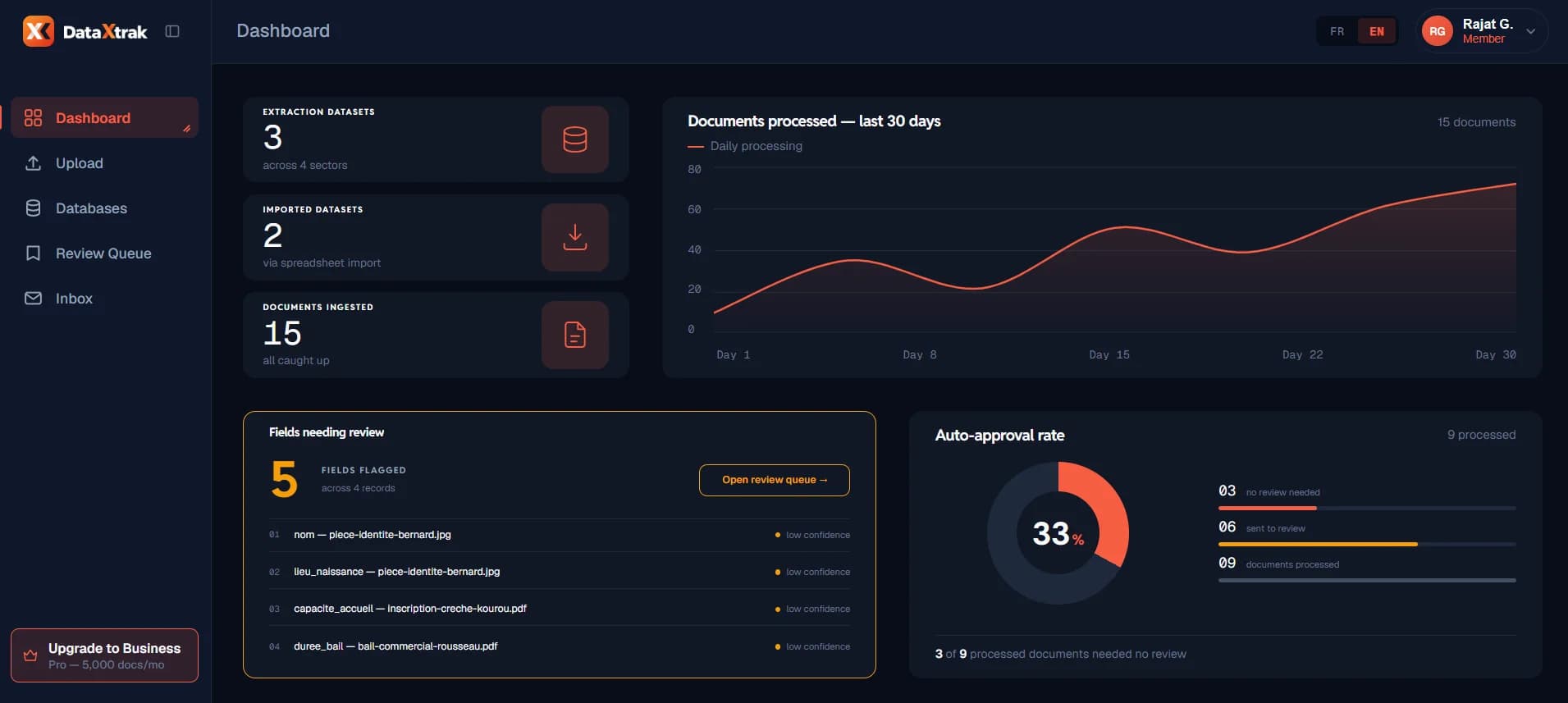
DataXtrak is a platform designed to simplify how businesses extract and manage information from documents. It helps users process documents, identify relevant information, and turn it into structured records. The platform reduces manual effort involved in handling and organizing document-based information while making the process more consistent and efficient.
Product Type
Document Processing SaaS
Platform
Web · EU Cloud
The Challenges
Overcoming Limitations in Document Processing
The existing DataXtrak application faced limitations in accessibility, scalability, and automation. Manual document categorisation, extraction reliability issues, and Excel-based data management made the workflow less efficient and harder to scale.

Desktop-Only Access
The existing platform lacked web access, multi-user support, and authentication, limiting its scalability as a SaaS product.

Manual Classification
Documents required manual categorisation before processing, adding extra effort to the document processing workflow.

Extraction Reliability
The existing data extraction process lacked confidence scoring and automatic retries, while API instability could cause processing failures.

Excel-Based Data Management
Excel remained the source of truth for records, making centralized data management and scalable platform operation more difficult.
Project Objective
Modernizing DataXtrak for Intelligent Document Processing
The modernization focused on four goals: create a scalable SaaS foundation, make extraction more reliable, centralize data, and provide secure European cloud infrastructure.
01

Automate the Workflow
Reduce manual intervention by automating document classification, processing, and data extraction.
02

Improve Extraction Reliability
Introduce validation and confidence scoring so uncertain information can be reviewed.
03

Centralize Data Management
Move from Excel-based storage to centralized records with isolated client workspaces.
04

Create a Secure Cloud Platform
Provide browser-based access on European infrastructure aligned with GDPR and data-sovereignty requirements.
The Solution
Turning the Objectives Into a Working Platform
The solution addressed the identified limitations by combining a modern SaaS experience, automated processing, reliable extraction controls, and centralized data management.

Web-Based SaaS Platform
The desktop application was rebuilt for browser access with authentication and isolated workspaces.

Automatic Document Detection
Documents can be classified automatically instead of requiring users to select a category first.

Controlled Extraction
Relevant information is extracted and uncertain results are surfaced for review.

Centralized Data Management
The platform moves record management away from Excel-based storage and into a centralized system.
Our Approach
A Structured Approach to Modernization
The project approach combined reuse of proven product knowledge with phased modernization, workflow automation, and validation before handover.

Assess What Already Works
Existing extraction categories, French field definitions, mappings, and reusable capabilities were reviewed before rebuilding.

Modernize in Phases
Architecture, interface, authentication, data workflows, and processing capabilities were developed through defined project milestones.

Automate the User Workflow
Manual categorisation was replaced with a workflow that moves from document intake through classification, extraction, and review.

Validate Before Handover
Testing, safeguards, GDPR checks, and final quality review were included before production handover.
How It Works
From Document Upload to Structured Records
DataXtrak provides a straightforward workflow for processing documents and managing the information extracted from them.
01
Upload
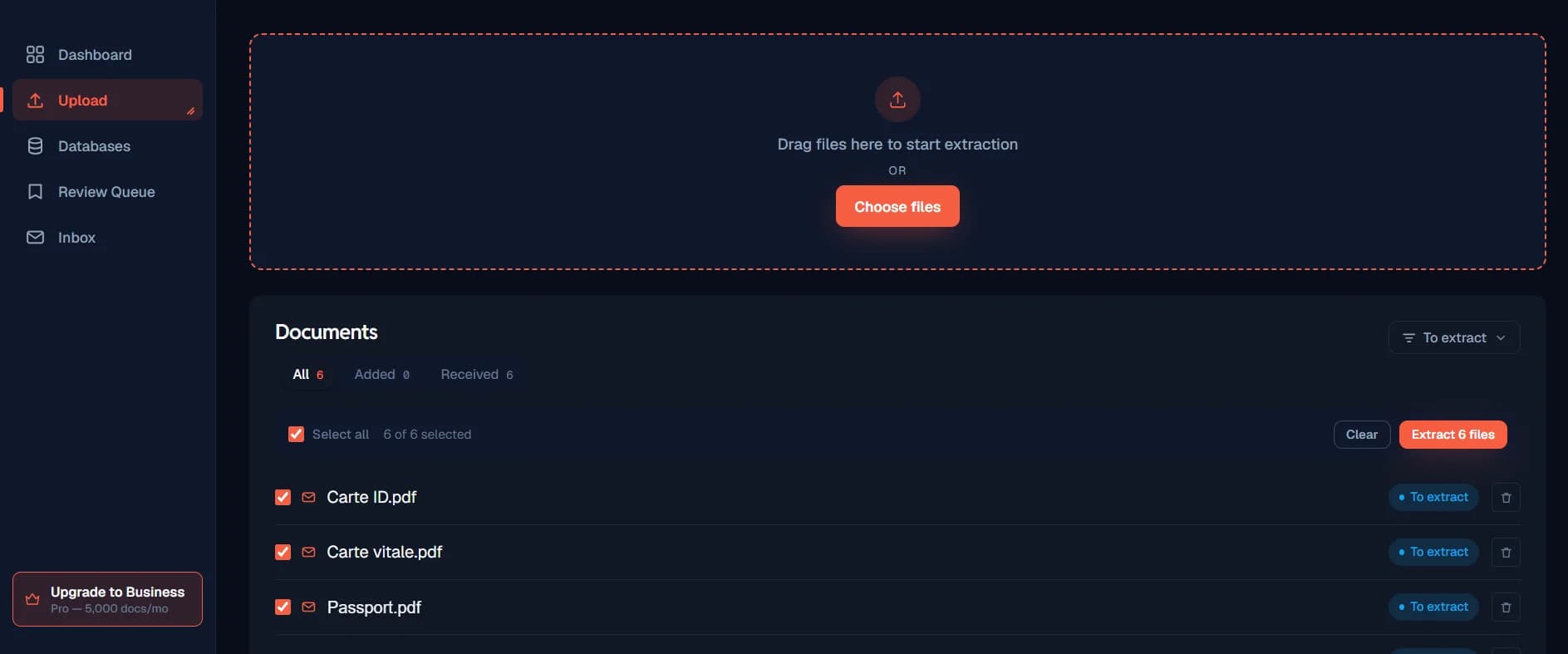
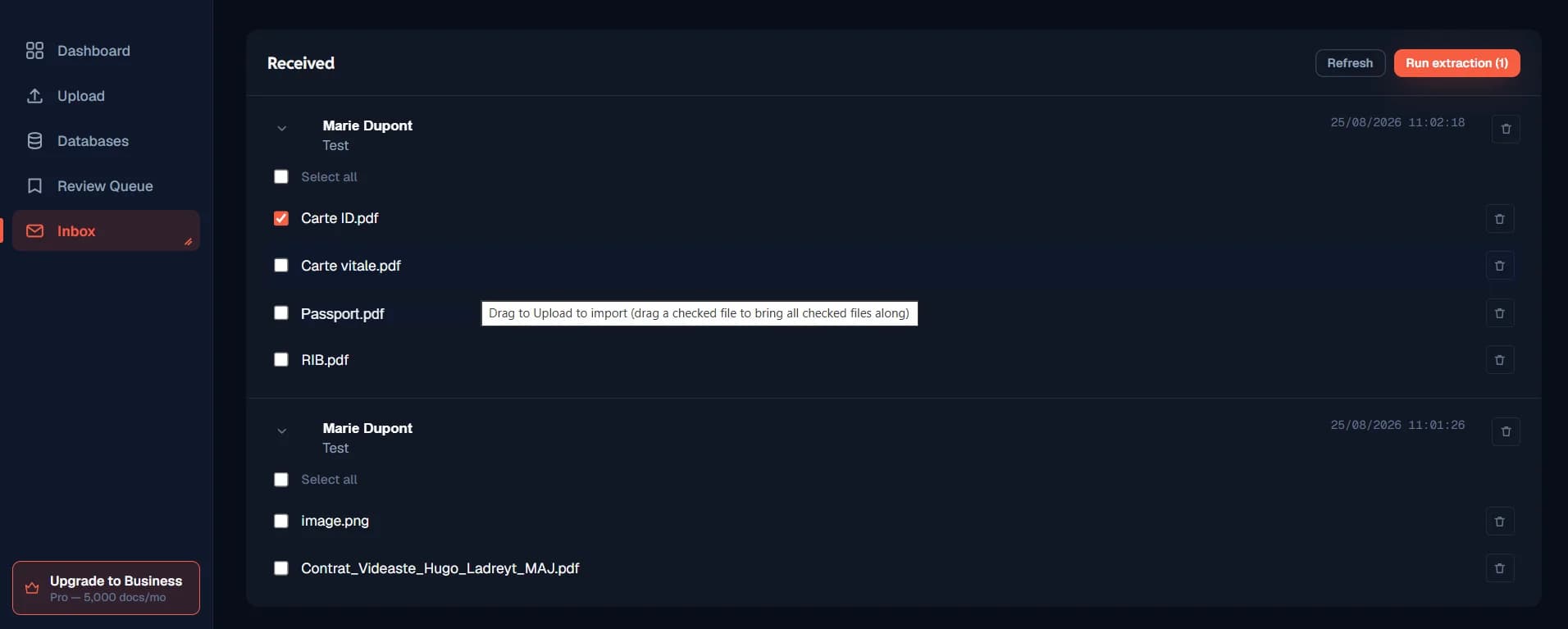
Users upload supported documents such as PDFs and images through the web interface. Files are added to a list, ready for extraction.
02
Process & Extract
The system automatically identifies the document type and extracts relevant information. No manual category selection is needed.
03
Review
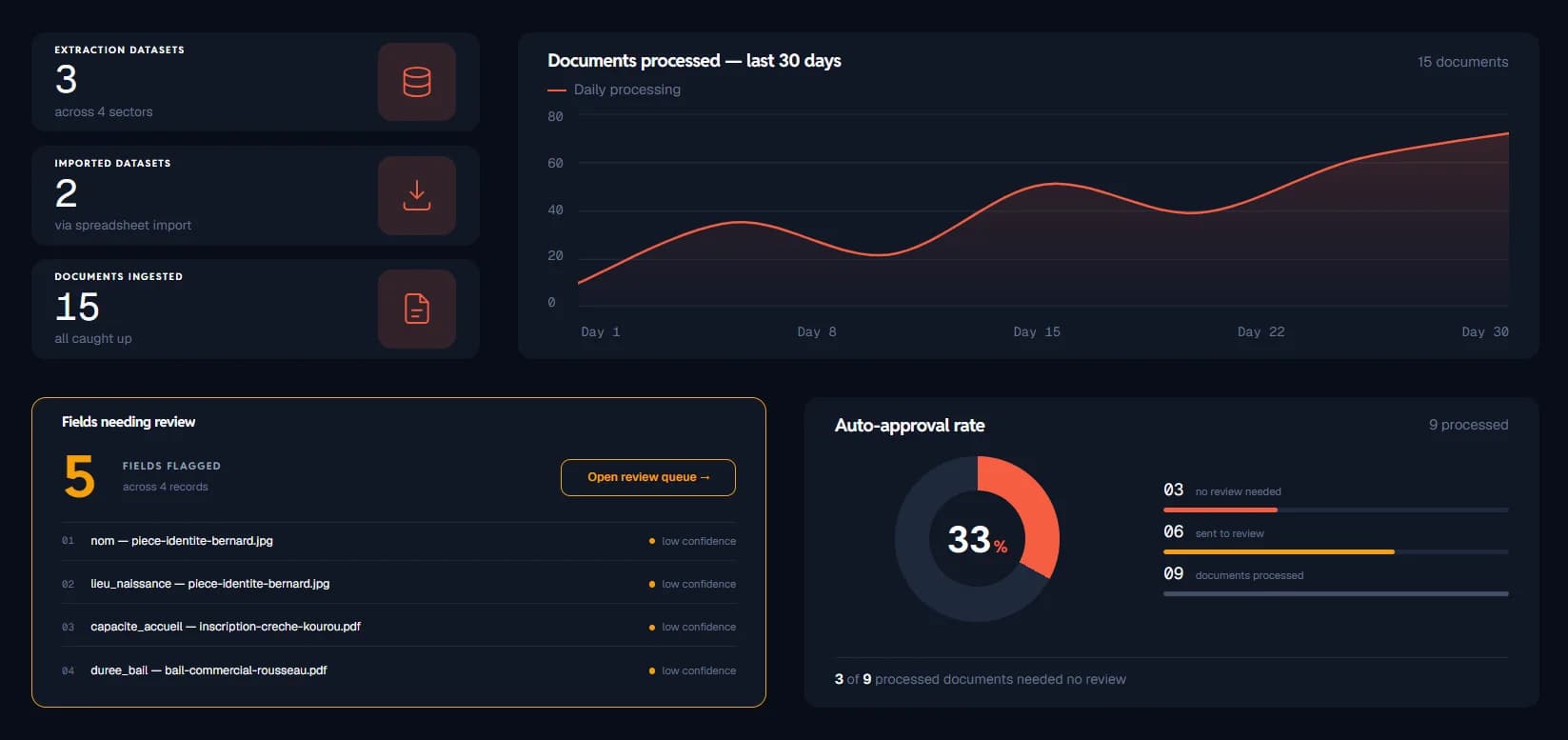
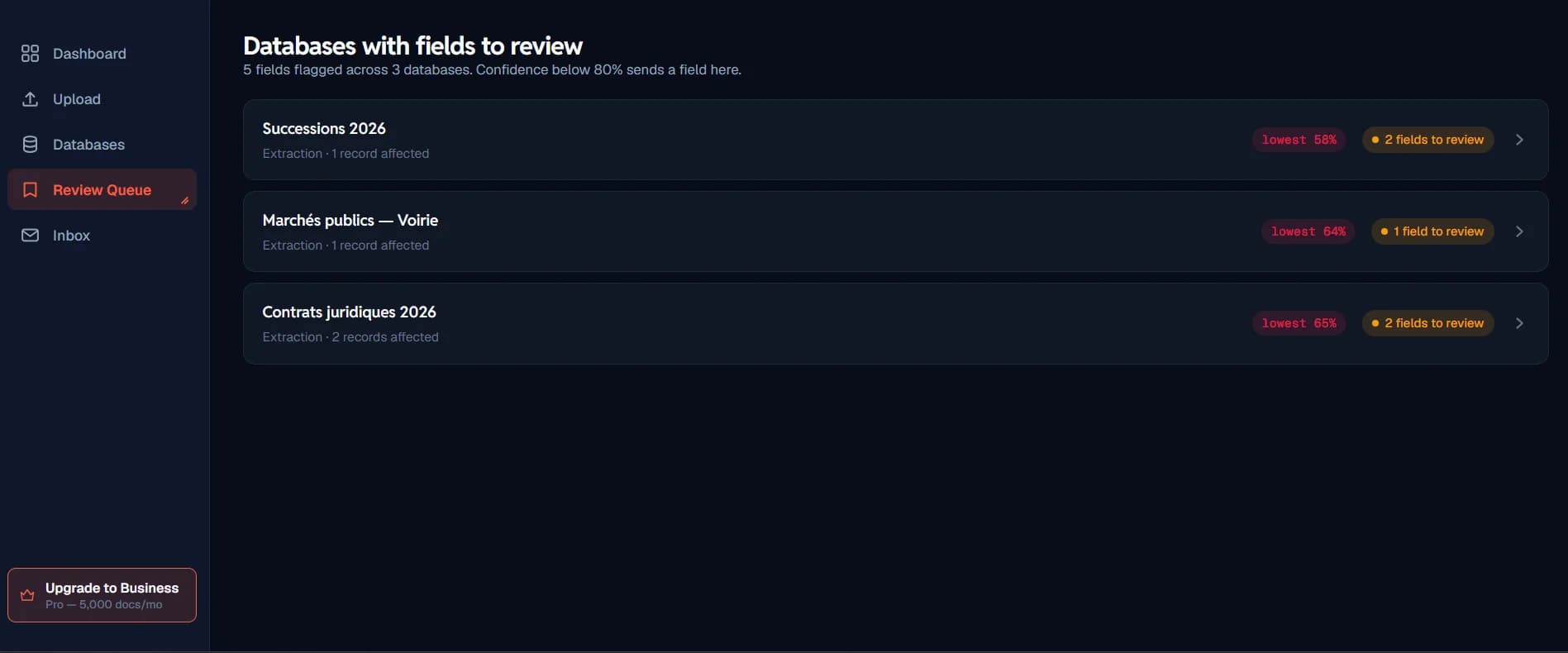
Extracted values are presented for checking, with uncertain information surfaced for attention. Low-confidence fields go to a review queue.
04
Manage Records
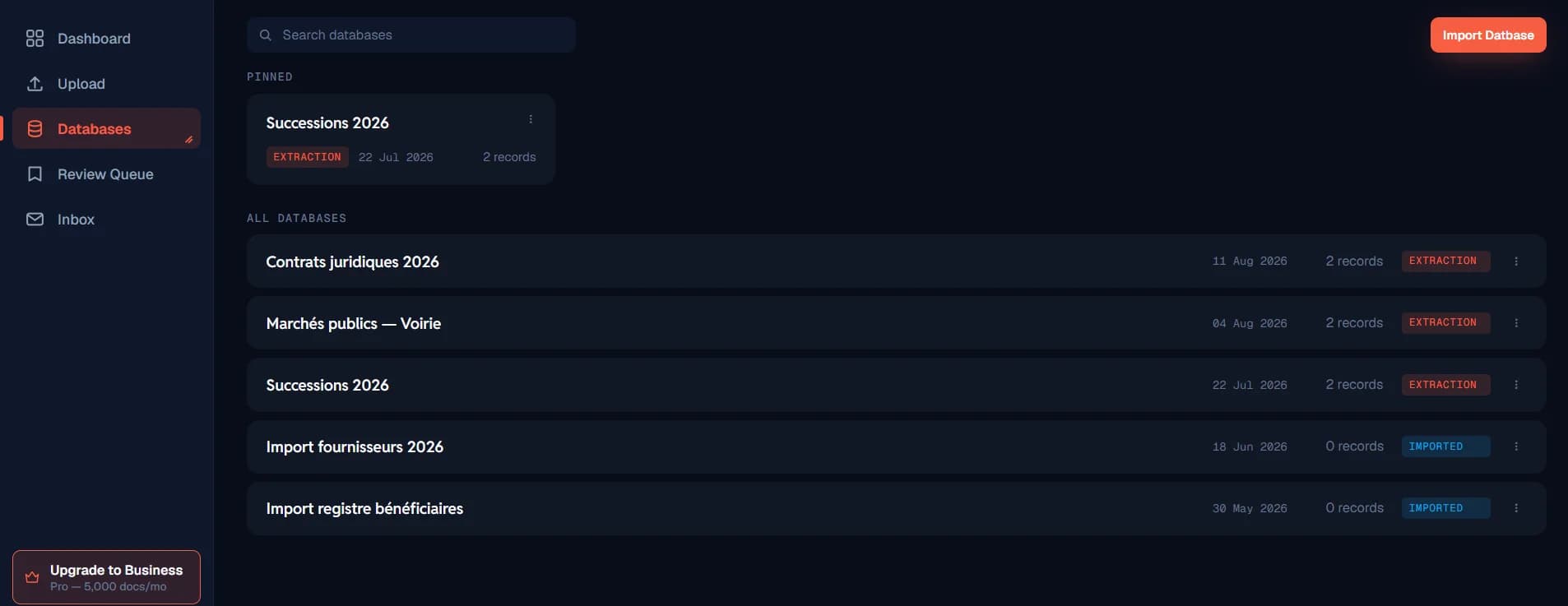
Validated information is organized into records while source documents remain accessible. Every value can be traced back to its source.
Technical Architecture
A Scalable Architecture for Automated Document Processing
The platform combines a modern web stack, asynchronous processing, centralized storage, and a controlled AI extraction layer.

Frontend
React 19, TypeScript 6, and Vite 8 provide the web application with FR/EN interface support.

Backend & Services
FastAPI, SQLAlchemy, PostgreSQL, Redis, and background workers support the core application and processing workloads.

Storage
PostgreSQL is the source of truth for structured records, while object storage holds original documents and files.

AI Layer
Mistral provides OCR, classification, schema generation, verification, and extraction, orchestrated through LangGraph.

Validation & Confidence
Deterministic checks produce field-level signals that become confidence and review states.

Security & Operations
Isolated workspaces, authentication, RBAC, audit capabilities, EU-hosted services, Docker deployment, and structured logging support secure operation.
Key Capabilities
Capabilities That Extend Beyond Extraction
The platform also supports practical capabilities for managing incoming data, records, outputs, and source documents after extraction.

Flexible Data Import
CSV and Excel imports can be assessed and cleaned for missing values, duplicates, and inconsistent formatting.

Record Continuity
Incoming documents can enrich an existing record when a known identity is detected, helping avoid unnecessary duplicates.

Structured Outputs
Users can work with structured records and carry forward PDF export, reporting, and email-sharing capabilities where in scope.

Document Traceability
Original source documents remain linked to their records so extracted information can be traced back to the source.
Business Impact
Industry Benchmarks for Document Automation
DataXtrak's own post-deployment business results are not documented in the supplied project materials. The figures below are illustrative industry benchmarks from published reports, not results measured for DataXtrak.
Manual Hours Saved per Year
A published report describes 4,800 hours of annual manual data-gathering, calculation, and data-entry work automated in a finance team.
Reduction in Processing Load and Lead Time
A published report on AI-assisted document processing describes approximately 50% reductions in processing load and lead time.
Saved per Invoice
A published report describes a nine-minute reduction in invoice processing time, alongside 80% straight-through processing.
These figures are external industry references, not measured results from the DataXtrak project.

Turn Your Documents Into Actionable Data
Build a smarter way to extract, validate, and manage the information hidden in your documents. Explore how a modern document data workflow can support your business.
TALK TO OUR EXPERTS