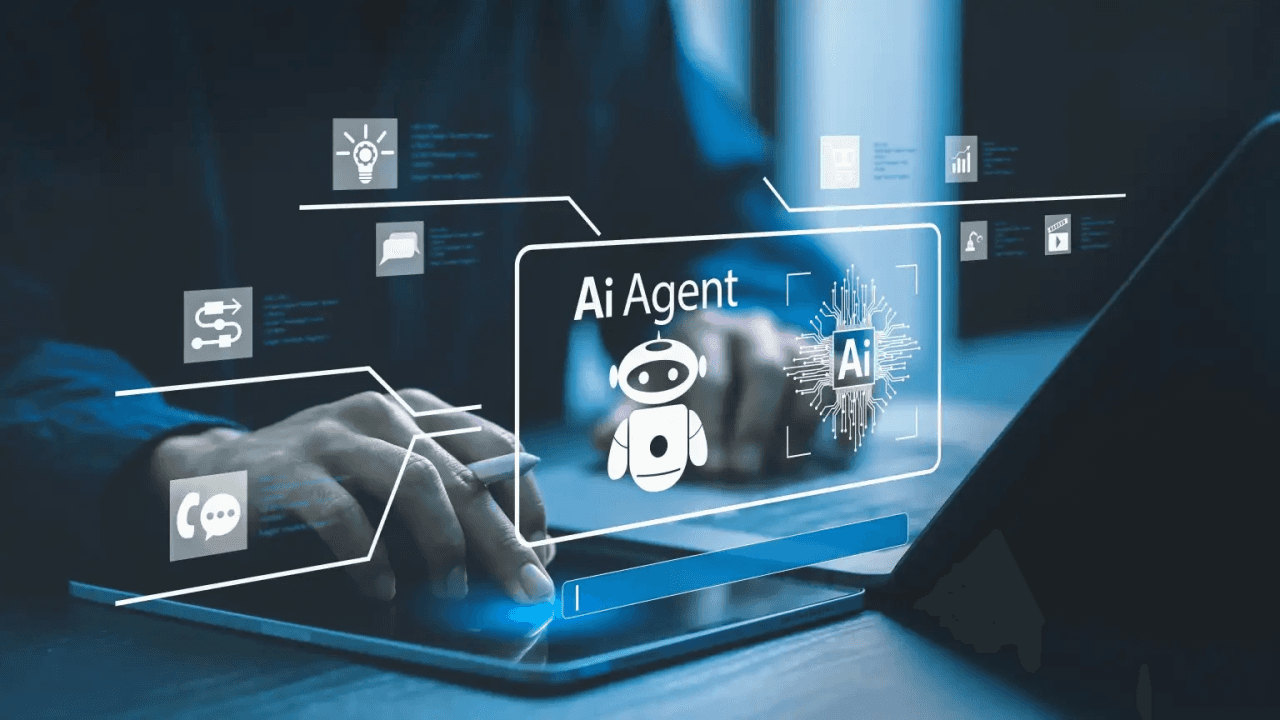
Agentic RAG: How to Deploy It for Customer Service Automation
Customer expectations have never been higher and the gap between what people expect from support and what traditional bots actually deliver has never been wider. Customers want instant, accurate, contextual answers. They want resolutions, not runarounds. What they usually get is a scripted chatbot that loops them back to the same FAQ page.
That is exactly the gap Agentic RAG was built to close.
Agentic RAG, short for Agentic Retrieval-Augmented Generation, is not just a smarter chatbot. It is an AI system that thinks, plans, retrieves the right information from your knowledge base, takes action through connected tools, and verifies its own output before responding. In customer service, that translates to resolved tickets, not just acknowledged ones.
If you are exploring how to deploy agentic RAG for customer service automation, this guide walks you through everything from what it is, to why it works, to the exact steps your team needs to follow to get it live.
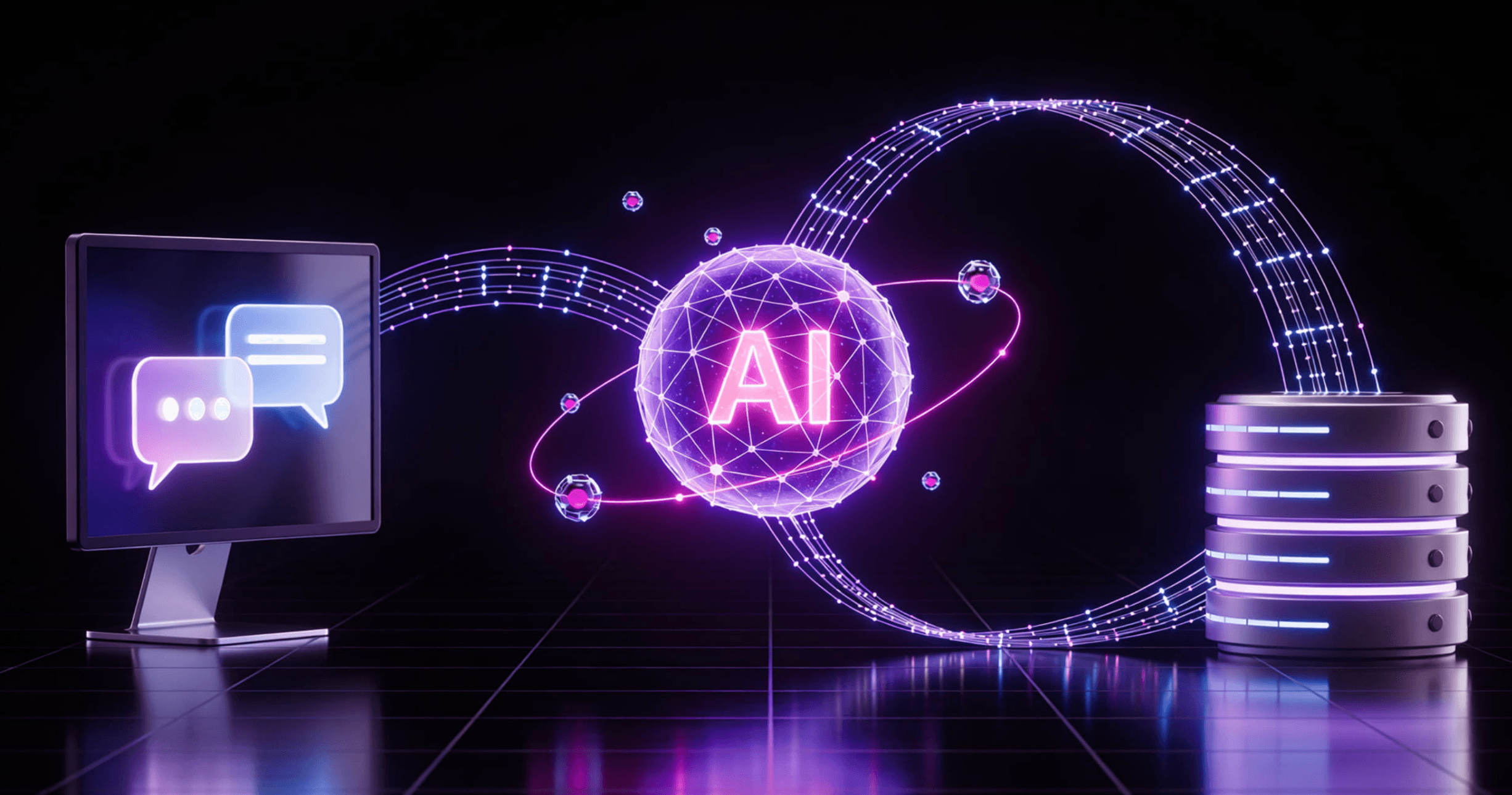
1. What Is Agentic RAG? (And Why It's Different from Basic RAG)
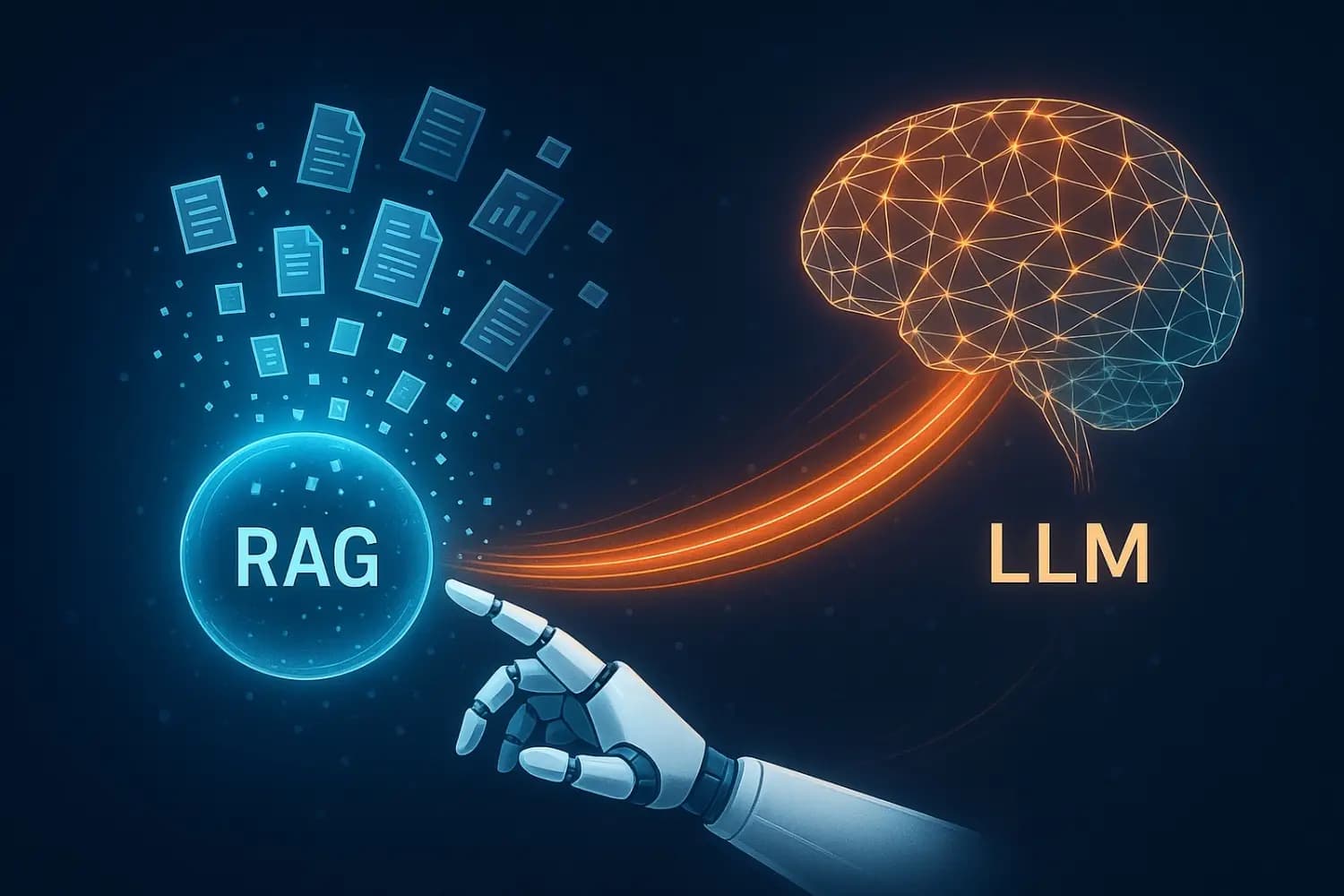
To understand Agentic RAG, you first need to understand its predecessor: basic RAG. Standard Retrieval-Augmented Generation works in a single pass: a user asks a question, the system retrieves relevant documents from a vector database, and the language model generates a response grounded in those documents. It is a major improvement over a vanilla LLM, but it is still passive. It retrieves once, answers once, and stops.
Agentic RAG goes several layers deeper. Instead of a single retrieve then generate step, agentic RAG introduces a reasoning loop. The AI agent:
- Plans what information it needs
- Retrieves from multiple sources if necessary
- Reasons over what it finds
- Acts using connected tools (APIs, CRMs, helpdesk systems)
- Verifies its output before sending a response
- Iterates if the answer is incomplete
The critical upgrade is that agentic RAG does things, it does not just say things. For customer service, this is the difference between a bot that tells a customer their refund policy and a bot that actually processes the refund.
2. The Customer Service Problem That Agentic RAG Solves
Traditional chatbots fail for three predictable reasons: they are scripted, they hallucinate when pushed off-script, and they cannot take any meaningful action on a customer's behalf.
The downstream effects are real. Ticket backlogs grow. Human agents spend 60–70% of their time on repetitive, low-complexity queries. Average handle times stay high. Customer satisfaction scores dip. And the cost of poor customer service compounds: studies consistently put the annual cost of customer churn from bad support experiences in the hundreds of billions globally.
Basic RAG addressed the hallucination problem by grounding responses in your own documents. But it still couldn't act. A customer asking "Has my order shipped?" needs the system to check the order management system in real time and not retrieve a paragraph from an FAQ about shipping timelines.
Agentic RAG solves this end-to-end. It retrieves current data, calls APIs, cross-checks information, and delivers a resolution, all within a single conversation turn. If you have read abouthow AI agents are already replacing parts of customer support teams, agentic RAG is the retrieval and reasoning engine powering that transformation.

3. How Agentic RAG Works in a Customer Service Context
Understanding how to deploy agentic RAG for customer service automation starts with understanding its architecture. Here is the flow in a real support scenario:
- Customer submits a query - e.g., "My order #4521 hasn't arrived. Can you help?"
- Triage agent classifies intent - order issue, priority level, customer segment
- Retrieval agent queries the knowledge base - pulls shipping policy, SLA terms, product details
- Tool-use agent calls the order management API - retrieves real-time status for order #4521
- Reasoning layer cross-checks - compares expected delivery date with current status
- Response generation - produces a grounded, accurate reply with next steps
- Self-verification - checks the response for accuracy and policy compliance before sending
This entire loop can complete in seconds. The key components making it work are:
- Vector database which stores your embedded knowledge base (policies, manuals, FAQs, product docs)
- LLM reasoning engine known as the brain that plans and generates
- Tool integrations: CRM, helpdesk, order systems, billing APIs
- Orchestration layer: frameworks like LangChain, LlamaIndex, or CrewAI manage agent coordination
Neura Dynamics' Generative AI Consulting services cover exactly this full-stack architecture from knowledge base design to agent orchestration and deployment.
4. Key Use Cases in Customer Service Automation
Once you understand the mechanics, the range of applications for agentic RAG in customer service becomes clear:
Automated ticket resolution - The agent retrieves relevant policy, checks account data, and resolves or routes tickets without human intervention. Resolution rates for Tier-1 queries can reach 70–80%.
Contextual FAQ responses - Unlike keyword-matching bots, agentic RAG interprets intent and retrieves semantically relevant answers. A question like "Can I get a refund after 30 days?" gets a nuanced answer, not a generic link.
Order tracking and updates - The agent calls your OMS or logistics API in real time, returning live status rather than templated responses.
Escalation detection and handoff - When sentiment signals frustration or a query exceeds the agent's defined scope, the system flags it for human escalation with full context already summarised - a feature explored in depth in our blog on how AI agents are reshaping customer support teams.
Multilingual support - Agentic RAG systems can be deployed across languages, retrieving from localised knowledge bases and generating responses in the customer's language.
Post-interaction summarisation - Agents auto-generate call notes and ticket summaries, eliminating manual documentation.
5. What You Need Before You Deploy
Learning how to deploy agentic RAG for customer service automation means understanding what needs to be in place before you write a single line of code.
Clean, structured knowledge base - Your vector database is only as good as the data you embed. Outdated policies, duplicate documents, and unstructured content degrade retrieval quality dramatically.
Defined agent roles and task boundaries - Each agent in your multi-agent setup needs a clear scope. Overlapping responsibilities without clear orchestration rules cause reasoning loops and inconsistent outputs.
Tool integrations - Your agentic RAG system needs read/write access to your CRM (Salesforce, HubSpot), helpdesk (Zendesk, Freshdesk), and order or billing systems.
Human-in-the-loop checkpoints - For high-stakes actions (refunds above a threshold, account closures, escalation decisions), human approval gates must be built into the workflow.
Governance and data privacy guardrails - Customer data flowing through an agentic system must be protected. Access control at the retrieval layer ensures agents only see what they are entitled to see.
This is where working with an experienced partner matters.Neura Dynamics' Intelligent Automation services are built around helping businesses establish exactly this foundation before deployment begins.
6. Step-by-Step Deployment Guide
Here is a practical roadmap for how to deploy agentic RAG for customer service automation:
Step 1: Audit your knowledge base and query data. Collect your top 100–200 customer queries. Map them to your existing documentation. Identify gaps, outdated content, and missing API data sources.
Step 2: Choose your LLM and RAG framework. Select a base model (GPT-4o, Claude, Gemini) and an orchestration framework (LangChain, LlamaIndex, CrewAI) aligned with your stack and compliance requirements.
Step 3: Build your retrieval pipeline. Chunk your documents intelligently, generate embeddings, and load them into a vector store (Pinecone, Weaviate, Qdrant). Index by topic, product line, or customer segment for precision retrieval.
Step 4: Define agent tasks, tools, and escalation rules. Map each agent to a specific function. Define the tools each agent can call. Set hard limits on autonomous actions and build escalation paths for edge cases.
Step 5: Test with real queries. Run your top customer queries through the system. Measure accuracy, hallucination rate, tool-call success rate, and latency. A well-tuned agentic RAG system should resolve 60–80% of Tier-1 queries without human intervention.
Step 6: Monitor, retrain, and refine. Deploy with observability tooling. Track retrieval quality, agent reasoning traces, and resolution outcomes. Continuously update your knowledge base as products and policies change.
7. Lessons from Government and Enterprise Deployments
The case for agentic RAG is not theoretical, government organisations are already proving it at scale. Singapore's GovTech reduced call documentation time by 72%, saving 99 seconds per call across government contact centres. The U.S. GAO deployed a RAG-powered internal research tool configured to never fabricate an answer — if the knowledge base did not have it, the system said so.
For businesses, the lesson is clear: agentic RAG works best when it is grounded in a trusted, well-maintained knowledge base with clear governance rules. The organisations seeing the best results are not the ones with the most powerful models — they are the ones with the cleanest data and the most clearly defined agent boundaries.
8. Common Pitfalls to Avoid
Even a well-architected agentic RAG system can underperform if these mistakes are made:
Over-automating without oversight - Giving agents too much autonomy without human checkpoints leads to errors that damage customer trust.
Poor knowledge base quality - Garbage in, garbage out. No amount of agent intelligence compensates for a stale or unstructured knowledge base.
Ignoring prompt injection risks - Malicious inputs can manipulate agent behaviour. Security testing must be part of every deployment, as Singapore's AI Agents Sandbox research confirmed.
No fallback path - Every agentic system needs a clear escalation route to a human agent. Customers who cannot reach a person when they need one become former customers.
The Competitive Advantage Is Available Now
Agentic RAG is not on the horizon, it is deployable today, and the businesses moving early are compounding advantages in resolution speed, cost efficiency, and customer satisfaction that will be very hard to close later.
The question is no longer whether to deploy agentic RAG for customer service automation. It is how fast you can do it well.
At Neura Dynamics, we specialise in building exactly this. Our team delivers end-to-end Generative AI Consulting, from knowledge base architecture and LLM fine-tuning to full agentic workflow deployment and ongoing optimisation. We have built intelligent automation solutions for fast-growing companies across e-commerce, education, healthcare, and enterprise platforms, and we are trusted by companies worldwide to turn AI ambition into production-ready results.
If you are ready to deploy agentic RAG for your customer service operations or even just want to understand what is possible for your specific use case:book a free consultation with the Neura Dynamics team. Let's build something that actually resolves tickets.
Author

Abhilasha is the Co-Founder of Neuradynamics, where she helps businesses turn Generative AI into practical, growth-focused solutions. Passionate about AI innovation, automation, and digital transformation, she writes about emerging technologies, scalable AI systems, and real-world applications across industries including EdTech, E-commerce, and automotive.