Arabic and English AI Customer Support on WhatsApp: A Guide for UAE and Saudi Businesses
Bilingual AI customer support on WhatsApp works when the agent detects the customer’s language on every message, answers from approved content in that language, and follows Meta’s messaging rules and local data laws.
This guide covers dialects and code-switching, the 24-hour window, UAE and Saudi data rules, setup steps and when a person should take over.
1. The Short Answer
Connect an AI agent to the WhatsApp Business Platform, give it your help content in both Arabic and English, and let it reply in whatever language the customer just used. Hand the chat to a person when the customer asks, when confidence is low, or when the topic is sensitive.
The hard parts are rarely the AI model. They are Gulf dialects, customers who mix languages mid-sentence, Meta’s rules on when you may message first, and where customer data is stored.
Key takeaways
- Detect language on every message, not once per chat. Gulf customers switch often.
- Test on real dialect, mixed-language and Arabizi chats, not translated English.
- Inside 24 hours of a customer message you can reply freely. Outside it, you need approved templates.
- Check where chat data is stored under the UAE PDPL and Saudi PDPL, and keep a clear route to a person.
2. Why WhatsApp for Customer Support in the UAE and Saudi Arabia?
In both countries, WhatsApp is where many customers already message friends, family and businesses. A support line there removes the step of finding an email address or web form.
Language is the other reason. Arabic is the official language of both countries, while English is widely used in business, especially in the UAE. A single support line has to handle both, often in the same chat.
Note: The WhatsApp Business Platform (often called the WhatsApp Business API) is Meta’s product for companies that connect WhatsApp to their own systems. The free WhatsApp Business app on a phone cannot run an AI agent at scale.
3. What Makes Arabic AI Customer Service Hard?
An AI agent tested only on formal Arabic will struggle with real WhatsApp chats. These are the four patterns to plan for on every bilingual build.
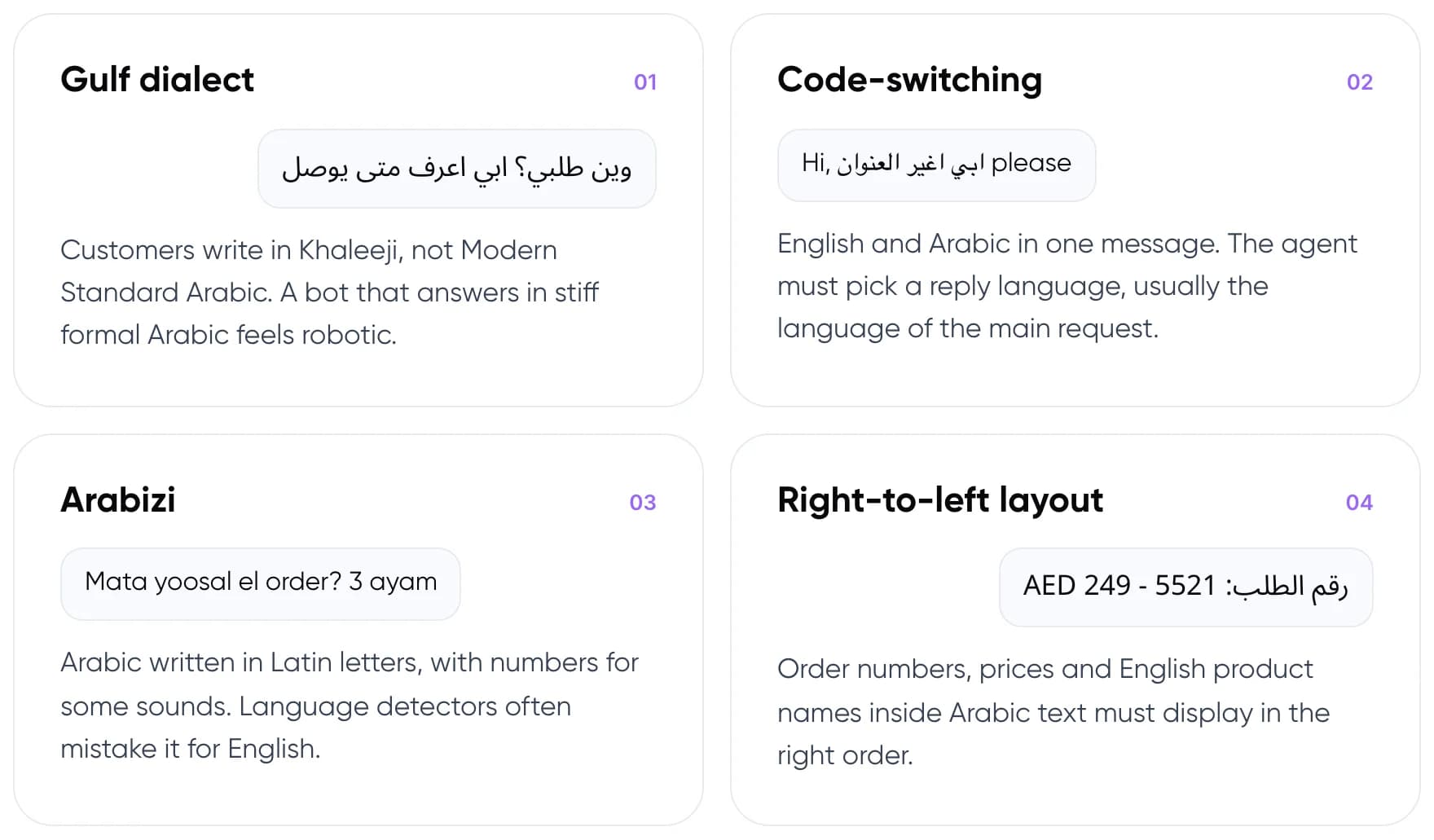
- Gulf dialect (“وين طلبي؟ ابي اعرف متى يوصل”). Customers write in Khaleeji, not Modern Standard Arabic. A bot that answers in stiff formal Arabic feels robotic.
- Code-switching (“Hi, ابي اغير العنوان please”). English and Arabic in one message. The agent must pick a reply language, usually the language of the main request.
- Arabizi (“Mata yoosal el order? 3 ayam”). Arabic written in Latin letters, with numbers for some sounds. Language detectors often mistake it for English.
- Right-to-left layout (“رقم الطلب: 5521 - AED 249”). Order numbers, prices and English product names inside Arabic text must display in the right order.
Large language models handle these patterns far better than older keyword bots, but quality still varies. Test with real anonymized chats from your own inbox, not translated English examples.
4. How Does a Bilingual WhatsApp Chatbot Reply?
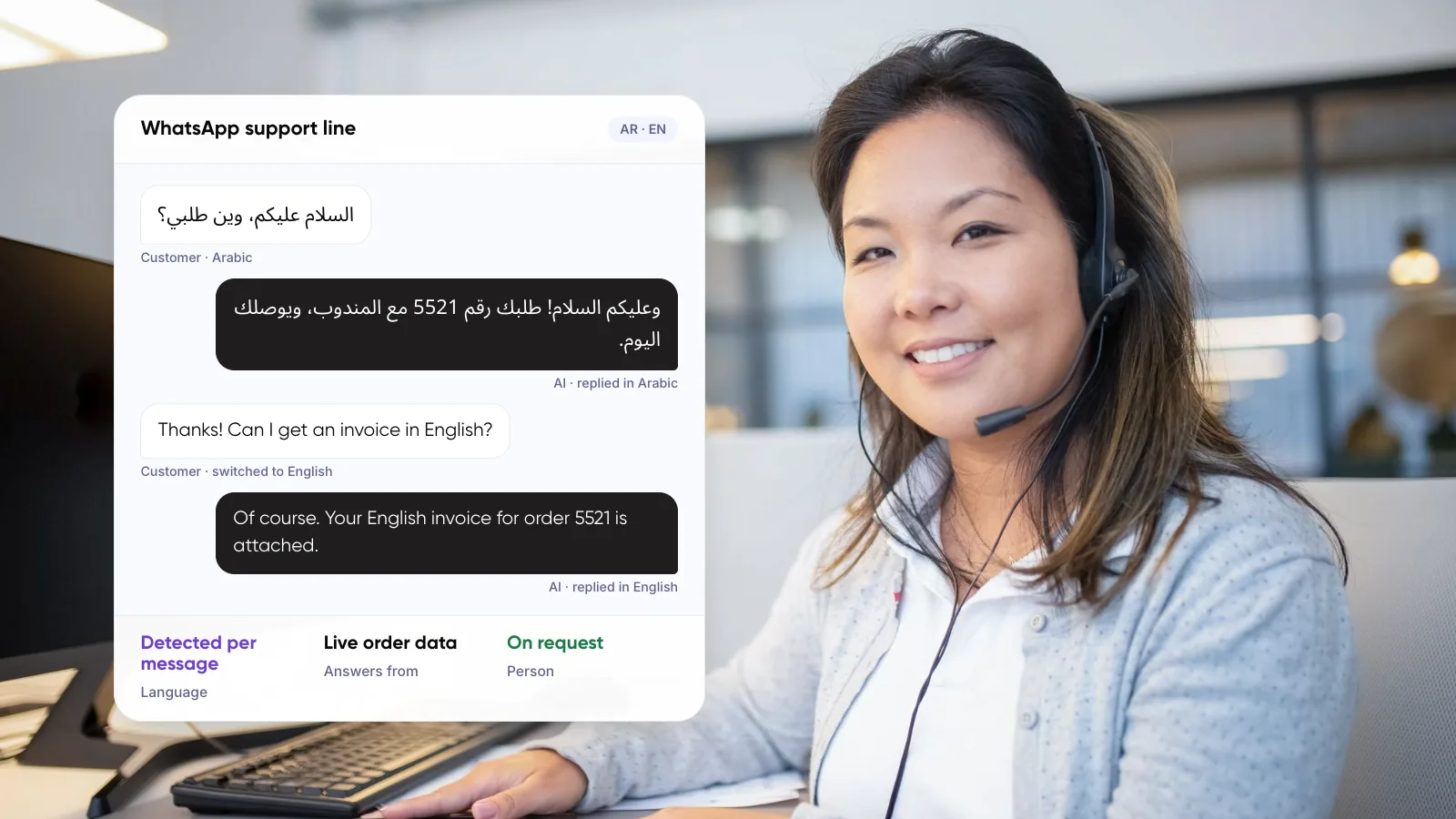
Every message goes through the same four steps.

- Detect language: Arabic, English, mixed or Arabizi.
- Find the answer: approved content in the same language.
- Check the rules: the 24-hour window and data limits.
- Reply or hand off: to an agent who speaks the language.
Here is what the agent detects and how it replies to five sample messages. Messages and order details are illustrative.
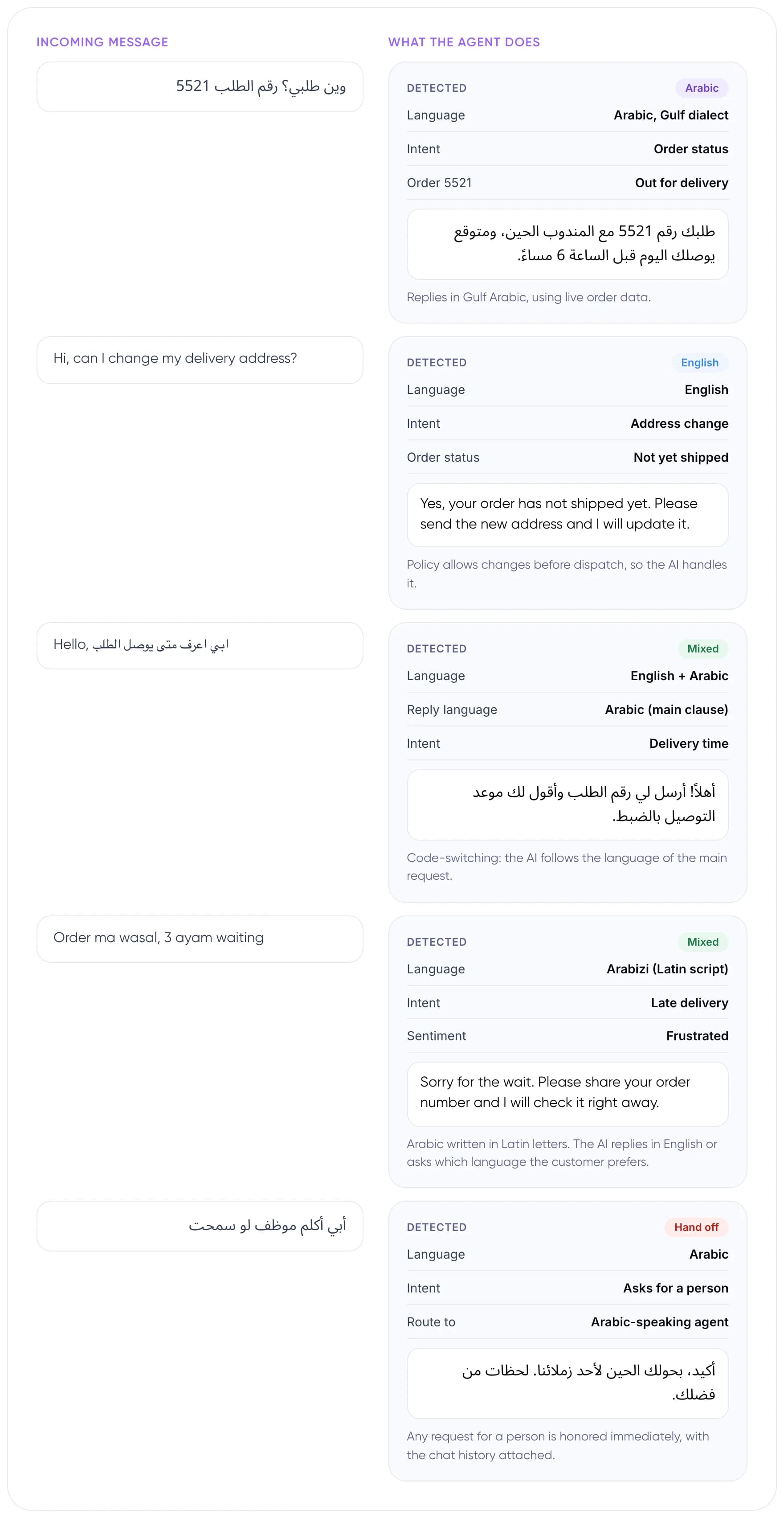
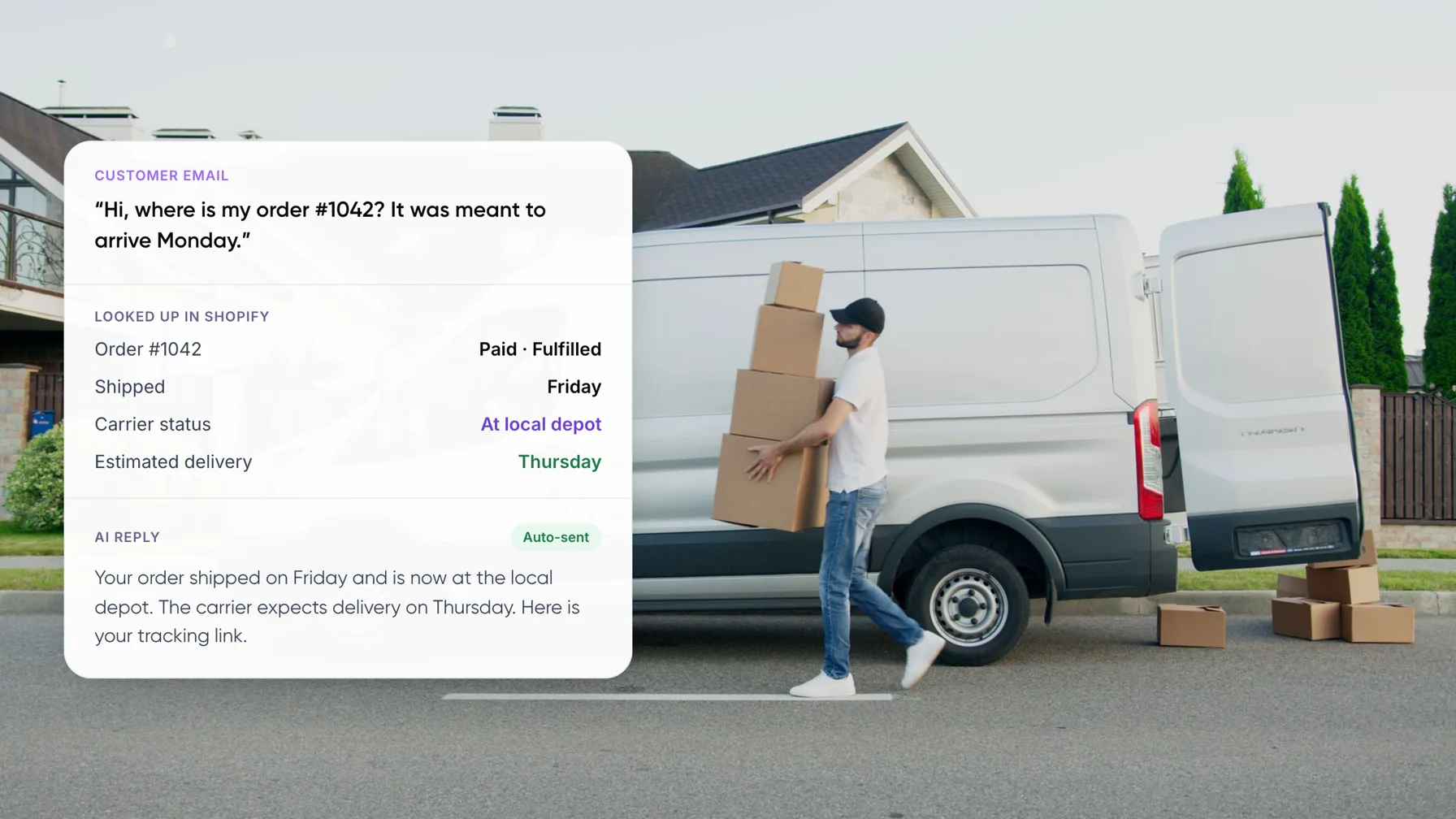
- “وين طلبي؟ رقم الطلب 5521” (Arabic, Gulf dialect; order status). Reply: “طلبك رقم 5521 مع المندوب الحين، ومتوقع يوصلك اليوم قبل الساعة 6 مساءً.” It replies in Gulf Arabic, using live order data.
- “Hi, can I change my delivery address?” (English; address change). Reply: “Yes, your order has not shipped yet. Please send the new address and I will update it.” Policy allows changes before dispatch, so the AI handles it.
- “Hello, ابي اعرف متى يوصل الطلب” (English + Arabic; delivery time). Reply: “أهلاً! أرسل لي رقم الطلب وأقول لك موعد التوصيل بالضبط.” Code-switching: the AI follows the language of the main request.
- “Order ma wasal, 3 ayam waiting” (Arabizi; late delivery; frustrated). Reply: “Sorry for the wait. Please share your order number and I will check it right away.” The AI replies in English or asks which language the customer prefers.
- “أبي أكلم موظف لو سمحت” (Arabic; asks for a person). Reply: “أكيد، بحولك الحين لأحد زملائنا. لحظات من فضلك.” Any request for a person is honored immediately, with the chat history attached and routed to an Arabic-speaking agent.
5. What Are the WhatsApp Business API Rules?
Meta’s rules shape how a WhatsApp chatbot can behave. These are the ones that matter most for support, based on Meta’s WhatsApp Business Platform pricing documentation.
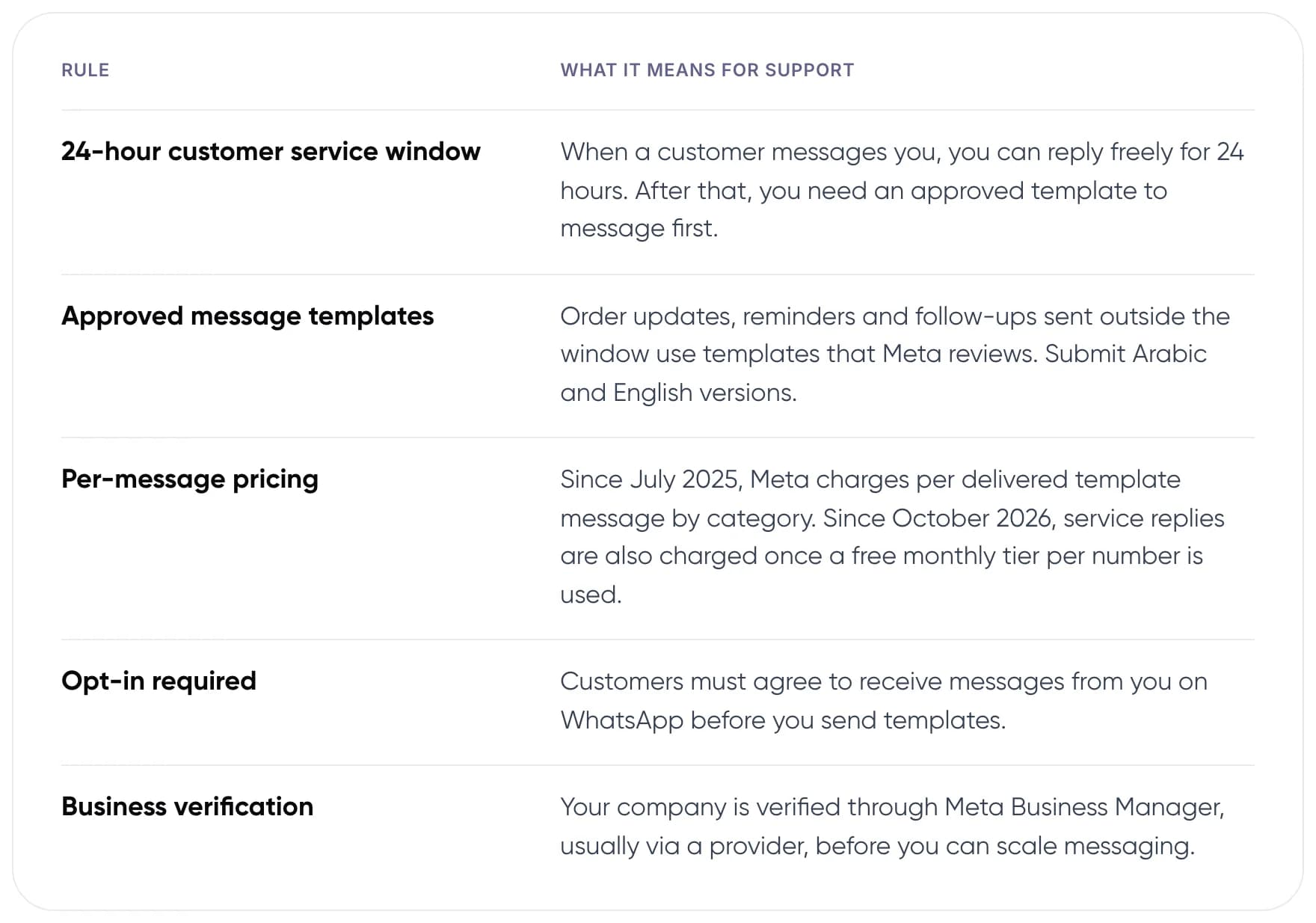
- 24-hour customer service window: when a customer messages you, you can reply freely for 24 hours. After that, you need an approved template to message first.
- Approved message templates: order updates, reminders and follow-ups sent outside the window use templates that Meta reviews. Submit Arabic and English versions.
- Per-message pricing: since July 2025, Meta charges per delivered template message by category. Since October 2026, service replies are also charged once a free monthly tier per number is used.
- Opt-in required: customers must agree to receive messages from you on WhatsApp before you send templates.
- Business verification: your company is verified through Meta Business Manager, usually via a provider, before you can scale messaging.
Warning: Meta changes pricing and template rules regularly. Check the current documentation before you budget, and approve every template in both Arabic and English.
6. UAE and Saudi Data Protection: What to Check
Support chats contain names, phone numbers, order details and sometimes ID or payment information. Both countries now have national data protection laws that apply to this data.
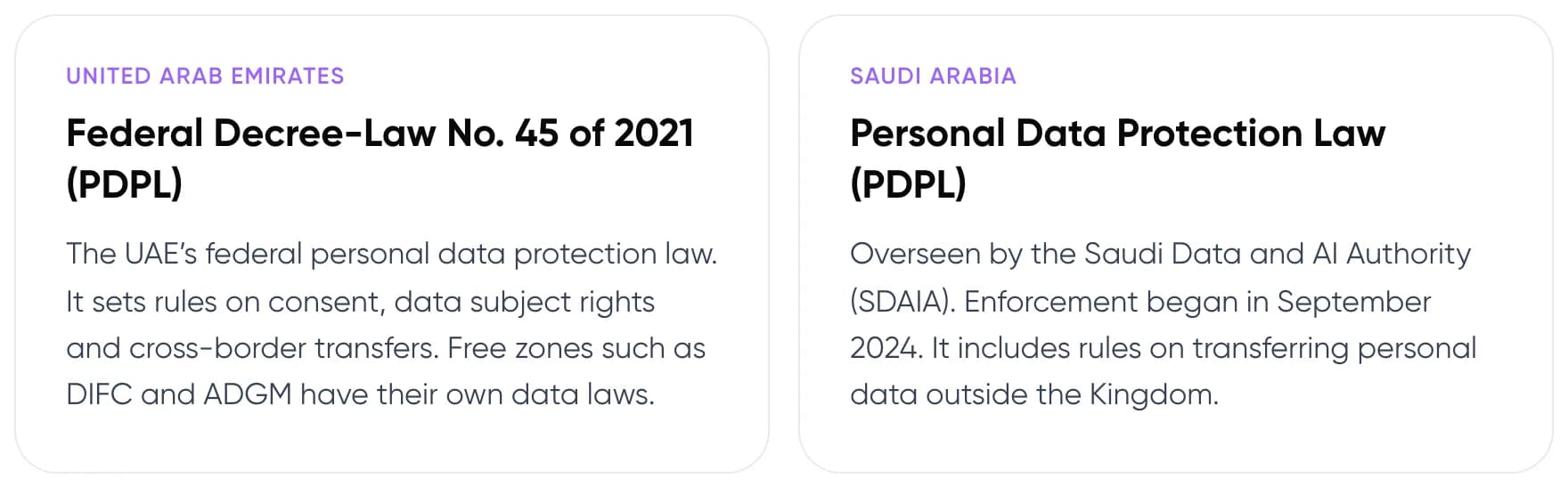
- United Arab Emirates: Federal Decree-Law No. 45 of 2021 (PDPL). The UAE’s federal personal data protection law. It sets rules on consent, data subject rights and cross-border transfers. Free zones such as DIFC and ADGM have their own data laws.
- Saudi Arabia: Personal Data Protection Law (PDPL). Overseen by the Saudi Data and AI Authority (SDAIA). Enforcement began in September 2024. It includes rules on transferring personal data outside the Kingdom.
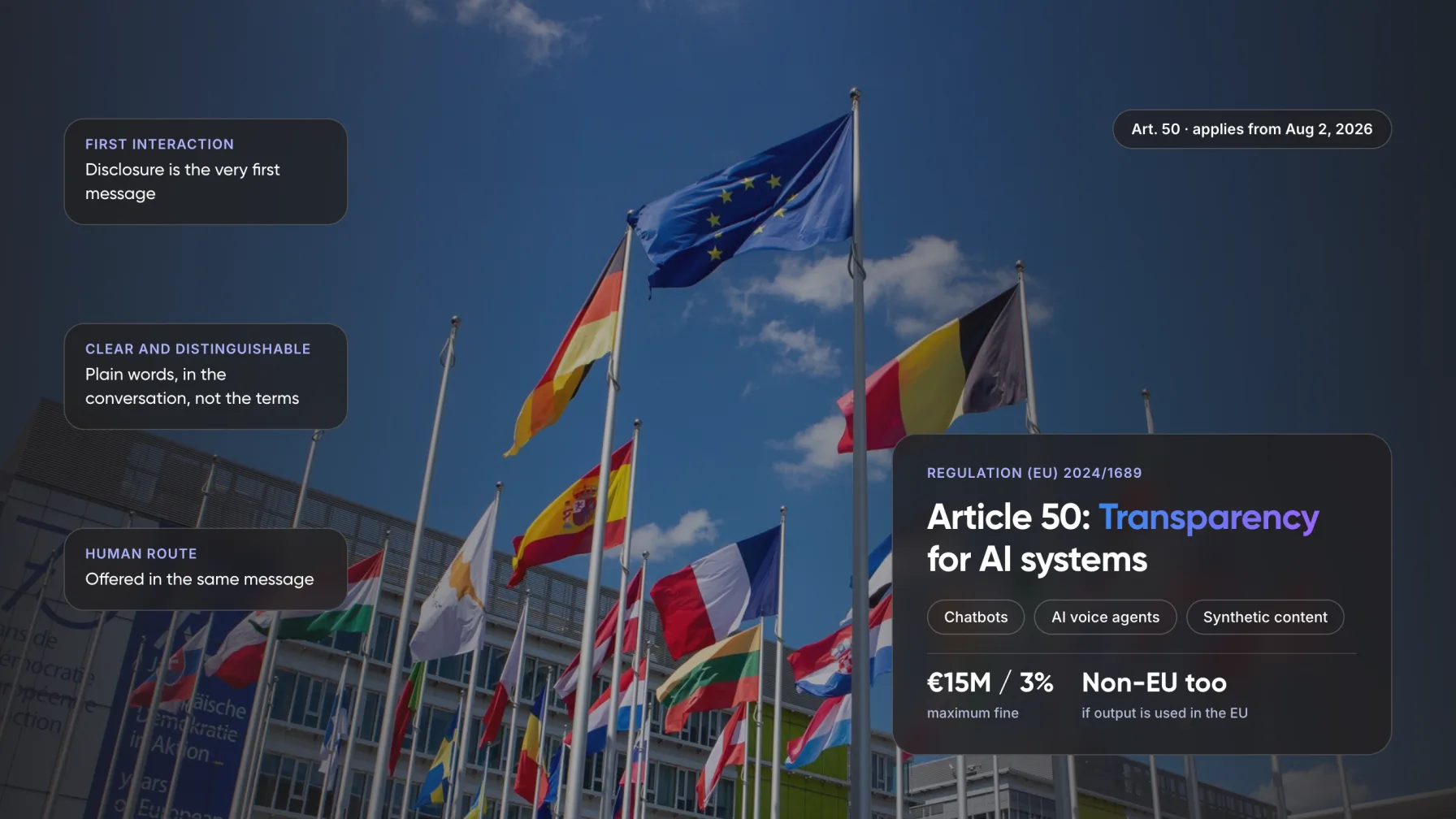
In our view, three checks cover most of the risk. Know where the AI provider stores and processes chat data. Do not send ID numbers or card details to the model. Tell customers in the first message that they are talking to an AI assistant. This is general information, not legal advice, so confirm details with your counsel.
Planning a bilingual WhatsApp agent for the Gulf? Book a free AI consultation.
7. How to Set Up Bilingual WhatsApp Automation
- Sort your chats by language and intent. Tag a month of WhatsApp chats as Arabic, English, mixed or Arabizi, and by topic. This becomes your test set.
- Set up the WhatsApp Business Platform. Verify your business with Meta through a provider and register your support number.
- Write help content in both languages. Write Arabic and English versions natively. Do not machine-translate policies and publish them unchecked.
- Connect your systems read-only. Orders, bookings or accounts, so the agent answers with real data instead of general text.
- Set handoff rules. Request for a person, low confidence, complaints, payments and anything legal or medical go to an agent who speaks the customer’s language.
- Get templates approved. Submit Arabic and English templates for order updates and follow-ups outside the 24-hour window.
- Pilot in draft mode. Agents approve replies for two weeks, with a native speaker reviewing Arabic tone, then switch the safest intents to auto-reply.
Tip: Ask a native Arabic speaker from your support team, not a translator, to review the first 200 AI replies. They will catch tone problems a translation check misses.
Grounding replies in your own documents is what keeps both language versions consistent. Our guide to agentic RAG for customer service automation explains how that works.
8. When Should a Person Take Over?
Hand off early in these cases, and route to an agent who speaks the customer’s language.
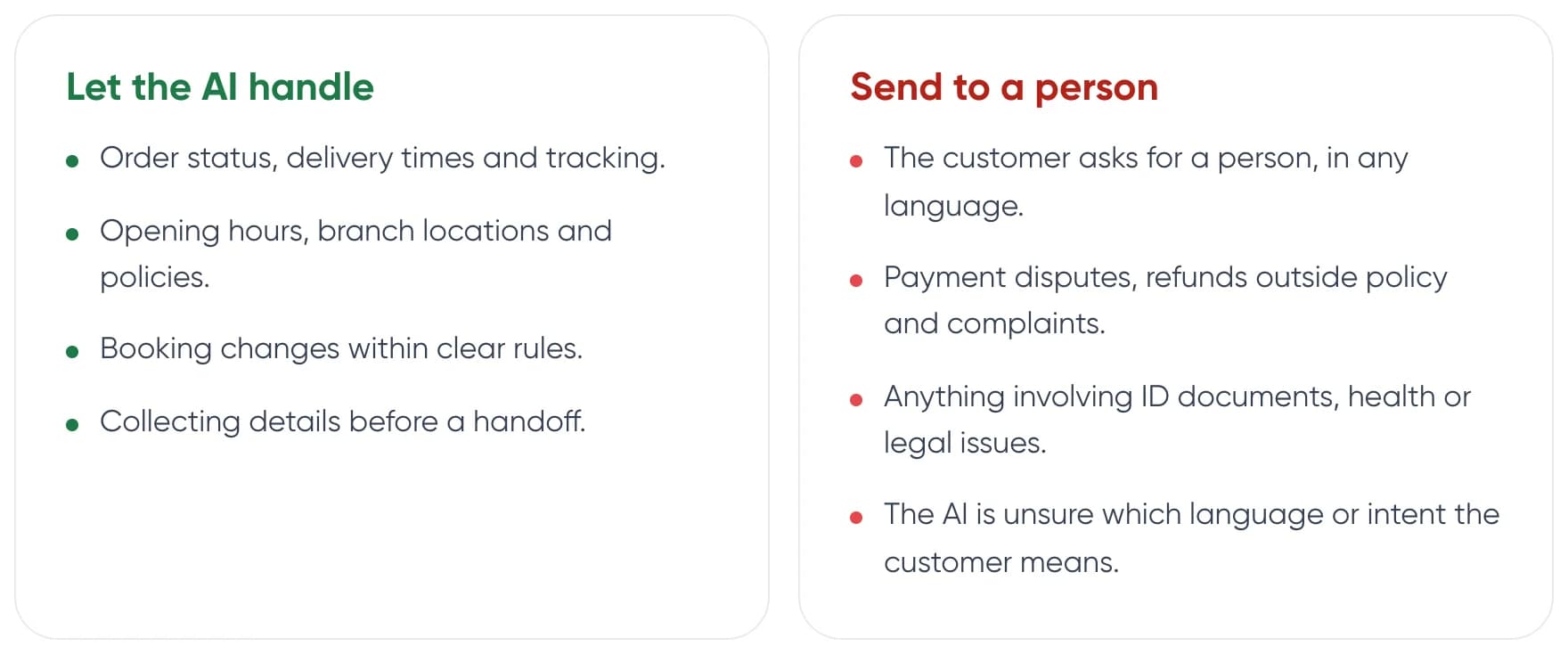
Let the AI handle
- Order status, delivery times and tracking.
- Opening hours, branch locations and policies.
- Booking changes within clear rules.
- Collecting details before a handoff.
Send to a person
- The customer asks for a person, in any language.
- Payment disputes, refunds outside policy and complaints.
- Anything involving ID documents, health or legal issues.
- The AI is unsure which language or intent the customer means.
Customers want that option. In a 2024 Gartner survey, 64% of customers said they would prefer companies did not use AI for service, mostly because they feared it would be harder to reach a person.
For a channel-by-channel view of how routine questions are answered and complex cases routed, see our omnichannel customer support build.
9. Common Mistakes
- Testing only in formal Arabic. Real chats use dialect and Arabizi. Test with your own anonymized messages.
- Locking language at the start. Customers switch mid-chat. Detect language on every message.
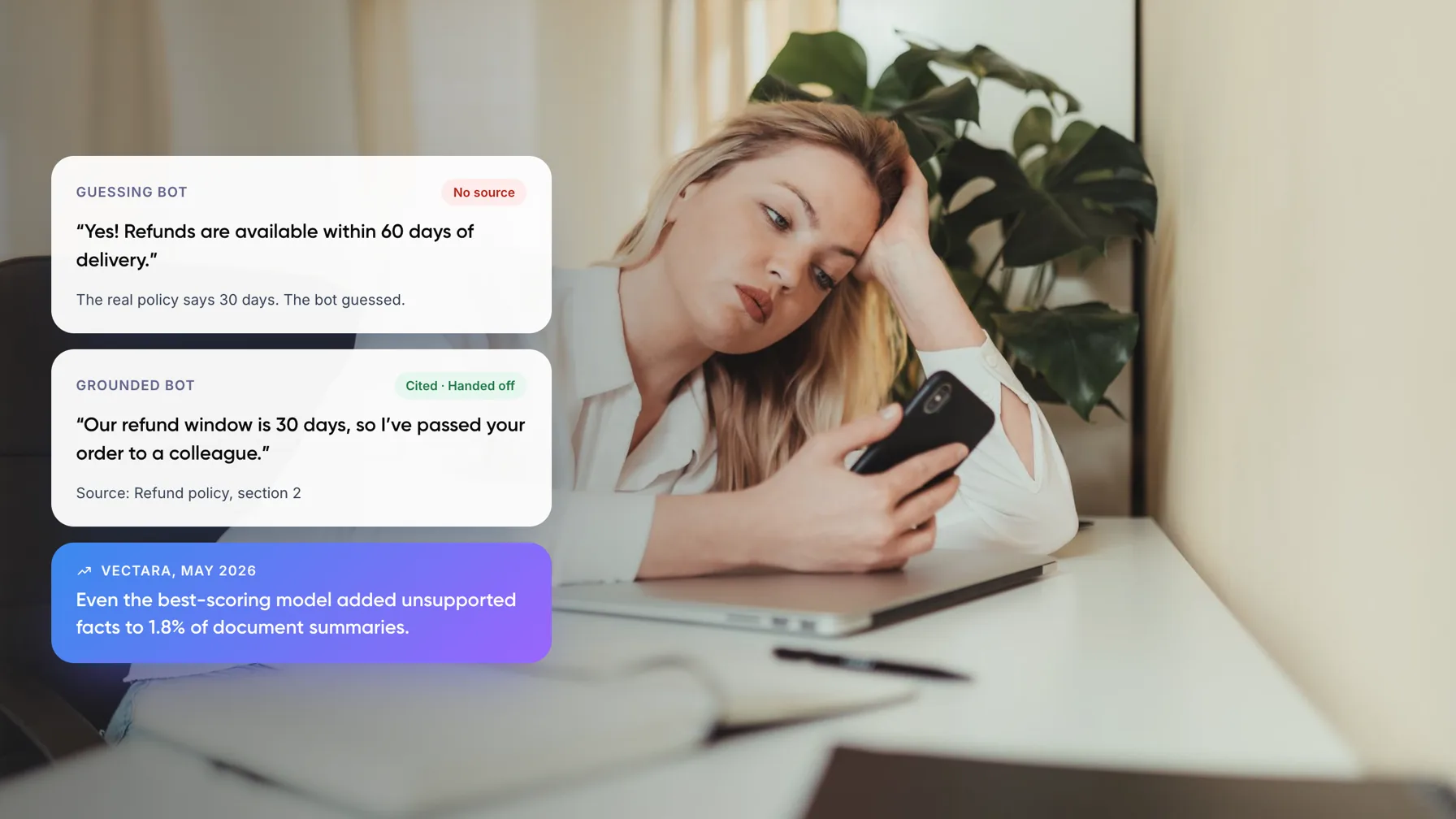
- Machine-translating policies. A wrong word in a refund rule becomes a promise. Have both versions written and checked by people.
- Ignoring the 24-hour window. Follow-ups after 24 hours fail without approved templates. Plan them before launch.
New to the topic? Start with what customer support automation is and how it works.
10. Frequently Asked Questions
Can a WhatsApp chatbot reply in both Arabic and English?
Yes. A modern AI agent can detect the language of each message and reply in the same language, including Gulf dialect. Quality depends on testing with real chats, writing help content natively in both languages, and handling customers who mix languages or write Arabic in Latin letters.
What is the WhatsApp Business API?
It is Meta’s WhatsApp Business Platform for companies that connect WhatsApp to their own systems, such as a CRM or an AI agent. It supports multiple agents, automation and approved message templates. The free WhatsApp Business app on a phone does not support this kind of automation.
What is the WhatsApp 24-hour rule?
When a customer messages your business, you can reply freely for 24 hours. After that, you can only start a conversation with a pre-approved message template, and the customer must have opted in. Plan Arabic and English templates for follow-ups before you launch.
Is AI customer support on WhatsApp allowed under UAE and Saudi data laws?
Yes, with care. The UAE PDPL (Federal Decree-Law 45 of 2021) and the Saudi PDPL both apply to customer chat data. Check where data is stored, limit sensitive data sent to the AI, and tell customers they are talking to an AI. Confirm specifics with legal counsel.
How much does WhatsApp automation cost?
Costs have two parts: Meta’s messaging fees and the AI agent itself, including build, hosting and usage. Meta charges per template message by category and country. Since October 2026, service replies are also charged once a free monthly tier per business number is used. Check Meta’s current pricing for the UAE and Saudi Arabia.
11. Conclusion
Arabic and English AI customer support on WhatsApp is practical today, provided you test on real Gulf chats and respect Meta’s window and data rules. Pull 500 anonymized chats from your inbox, tag them by language and intent, and use that set to test any agent before launch.
Tip: Once you know your monthly WhatsApp chat volume, our free AI ROI Calculator estimates the hours saved and payback.
To build it with us, see our AI customer support automation services. Or book a free AI consultation.
Author