About the news
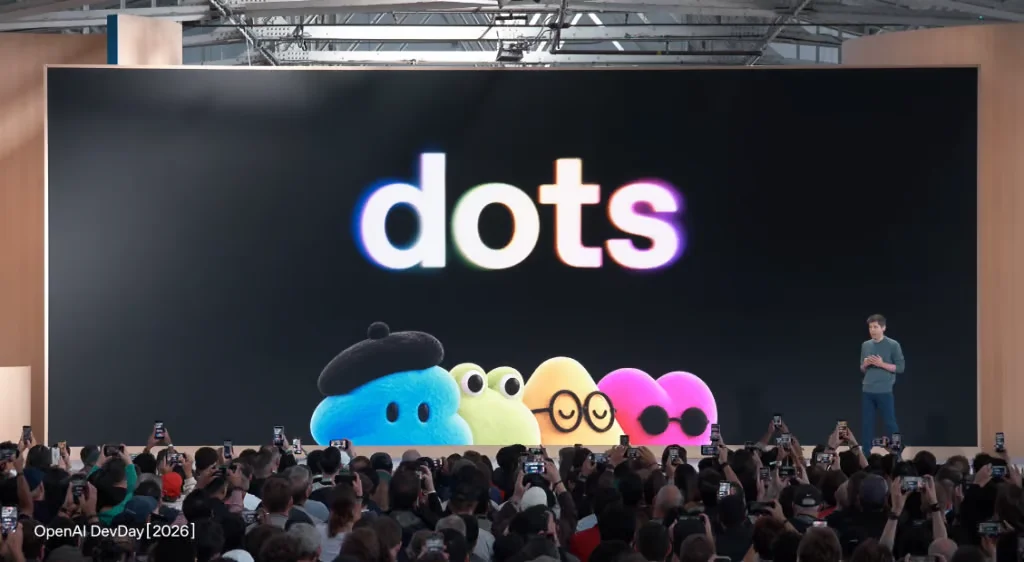
On September 29, 2026, at its DevDay event, OpenAI introduced Dots - always-on agents designed to keep working on a user’s goals even when the chat window is closed.
Each Dot is powered by GPT-6 Astra and runs on its own cloud computer with a dedicated browser. It can browse the web, create and edit files, run tools, and connect to more than 4,000 apps through OpenAI’s plugin ecosystem. Users can name their Dot, set rules about what it may do autonomously versus what requires approval, and open the agent’s virtual computer at any time to inspect its work.
Dots are meant to operate persistently. They learn from feedback over time, maintain context across conversations and apps, and can continue making progress between interactions. Users can reach them through ChatGPT, Slack, or Microsoft Teams, with voice calls already supported and text messaging planned. OpenAI is also previewing specialist Dots for enterprises—agents that carry their own identity, access controls, and deeper integrations into company systems of record.
Availability is limited at launch. The first Dot is included at no extra cost for eligible Pro and Business Premium users (with some regional restrictions for Pro accounts). Enterprise, Edu, and Healthcare workspaces can enable a beta once an administrator turns it on. Conversations with a Dot do not count against normal ChatGPT usage limits, though deeper tasks draw from the plan’s allowance.
Why it matters
Most AI interactions still happen inside a single conversation that ends when the user closes the window. Dots represent a shift toward agents that keep working in the background, maintain longer-term context, and act across multiple apps without constant supervision.
This design moves OpenAI more directly into the persistent personal-agent category that Meta has been pushing with Muse. For individual users it offers the possibility of an assistant that stays on top of ongoing projects. For organizations, the specialist Dot preview points toward agents that can take on defined roles inside existing systems of record, with identity and permission controls built in.
The practical value will depend on how reliably the agents stay within the boundaries users set and how useful the background work turns out to be. Early controls - custom rules, explicit consent for sensitive actions, and the ability to inspect the agent’s virtual computer—show OpenAI is treating autonomy and oversight as linked problems.
What to watch next
The most immediate questions are reliability and expansion of access. Real-world performance on multi-step, multi-day tasks will determine whether Dots move beyond early-adopter use. How quickly OpenAI opens the feature to more regions and lower-tier plans will also shape adoption.
On the enterprise side, the specialist Dot preview and the integration work with Microsoft Agent 365 are worth following. If those agents can operate safely inside company systems of record with clear identity and audit trails, they could become a meaningful new surface for AI-assisted work. Equally important will be how the safety and privacy measures hold up once larger numbers of users begin running longer-lived agents with broader app access.