About the news
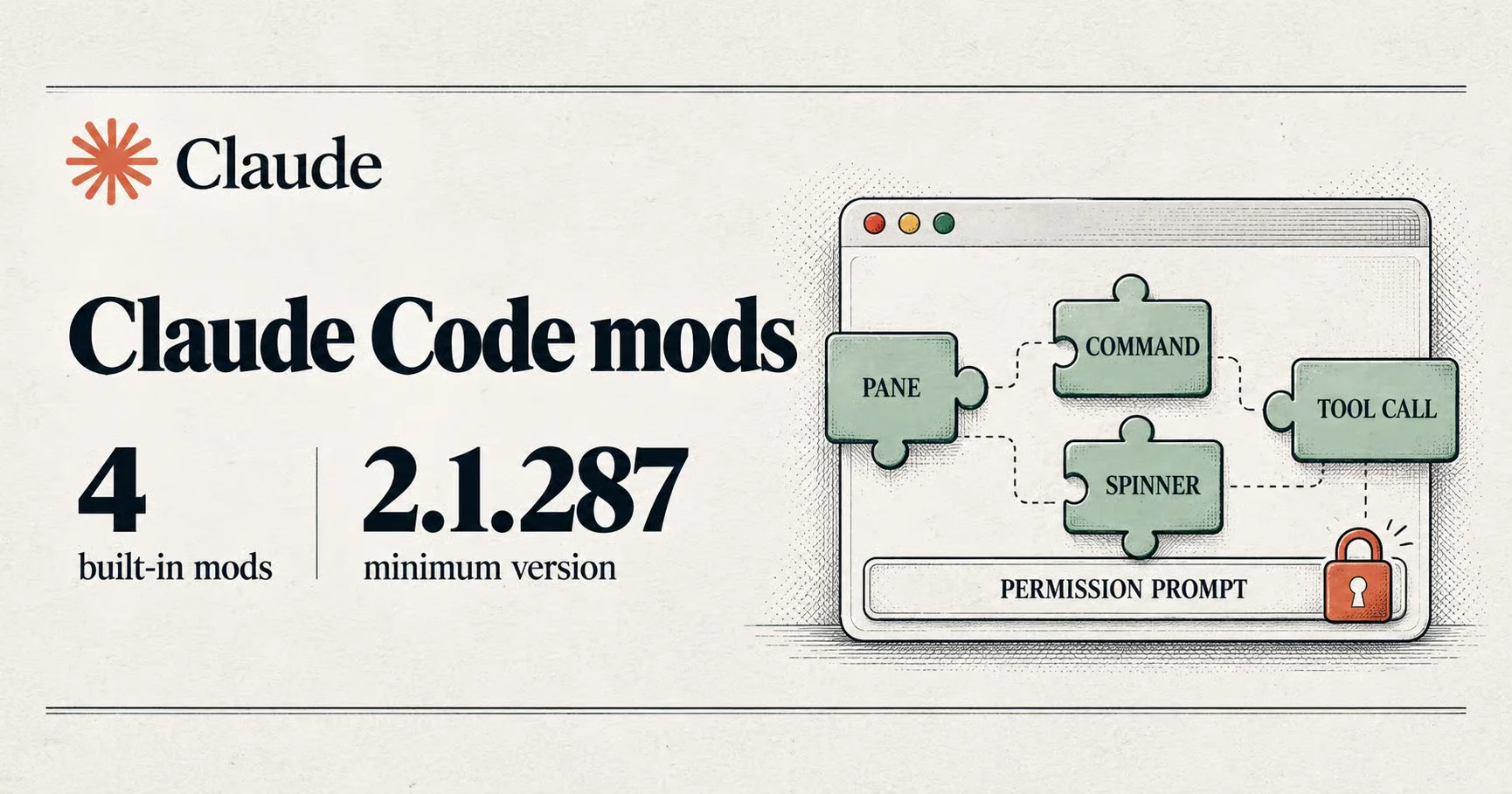
On October 1, 2026, Anthropic released Claude Code version 2.1.287 with a new system called Mods. A mod is a small TypeScript or JavaScript function that runs inside Claude Code and hooks into its internal events - tool calls, prompt submission, permission requests, and UI rendering.
With a single function a developer can rewrite a prompt before it reaches the model, block or retry a tool call, approve or deny a permission, redact secrets from tool output, or draw new interface elements such as panes, buttons, and status lines. Mods ship inside ordinary plugins and install with the familiar /plugin command in both the CLI and the desktop app.
Anthropic converted several of its own built-in features into mods at launch, including the /diff pane, so users can now disable or replace them. Developers can write a mod themselves or simply describe the behavior they want in plain language; Claude Code will generate the code, install it, and hot-reload the change in the same session.
Early examples already circulating include Token Weather (a live context-window forecast above the prompt), Blast Radius (which intercepts risky shell commands and shows what they would affect), and Replay Theater (which lets users step through recent file edits one diff at a time).
Why it matters
Most coding agents until now have offered limited configuration - settings, skills, or external hooks that sit outside the core loop. Mods run inside the process, giving developers direct control over both behavior and interface. This turns Claude Code from a fixed product into a platform that teams can adapt to their own coding standards, safety rules, and daily workflows.
Because mods can intercept events in real time, they open practical new possibilities: automated safety checks before dangerous commands run, custom review panes that match a team’s preferred style, or lightweight agents that watch the main session and flag things the user might miss. The low barrier to creation describe it in natural language and Claude writes the code, means the feature is accessible beyond a small group of power users.
What to watch next
The most immediate questions are adoption and safety. Mods run with the same system access as Claude Code itself, so the quality and trustworthiness of the plugin ecosystem will matter quickly. Organizations already have plugin controls; how strictly they are applied, and whether a marketplace of well-reviewed mods emerges, will shape how widely the feature is used.
It will also be worth watching which kinds of mods prove most useful in daily work and whether Anthropic continues converting more of its built-in features into the same system. If the pattern holds, Claude Code could evolve into a much more modular and team-specific tool over the coming months.